


Every design here is built from dots and short pulled strokes, which means a toothpick or a cheap dotting tool gets you most of the way there. The list leans heavily on floral french tips, so the flowers sit at the smile line instead of floating randomly in the middle of the nail, and that placement is what keeps them looking intentional. Coffin, oval and squoval shapes dominate, with a mix of matte, glazed and soft cream finishes. I kept the most wearable ideas in this list and skipped anything that needs three brushes and a steady hand you don’t have. If you want more petal work after this, the bigger floral nails roundup and the french tip archive both go deeper.
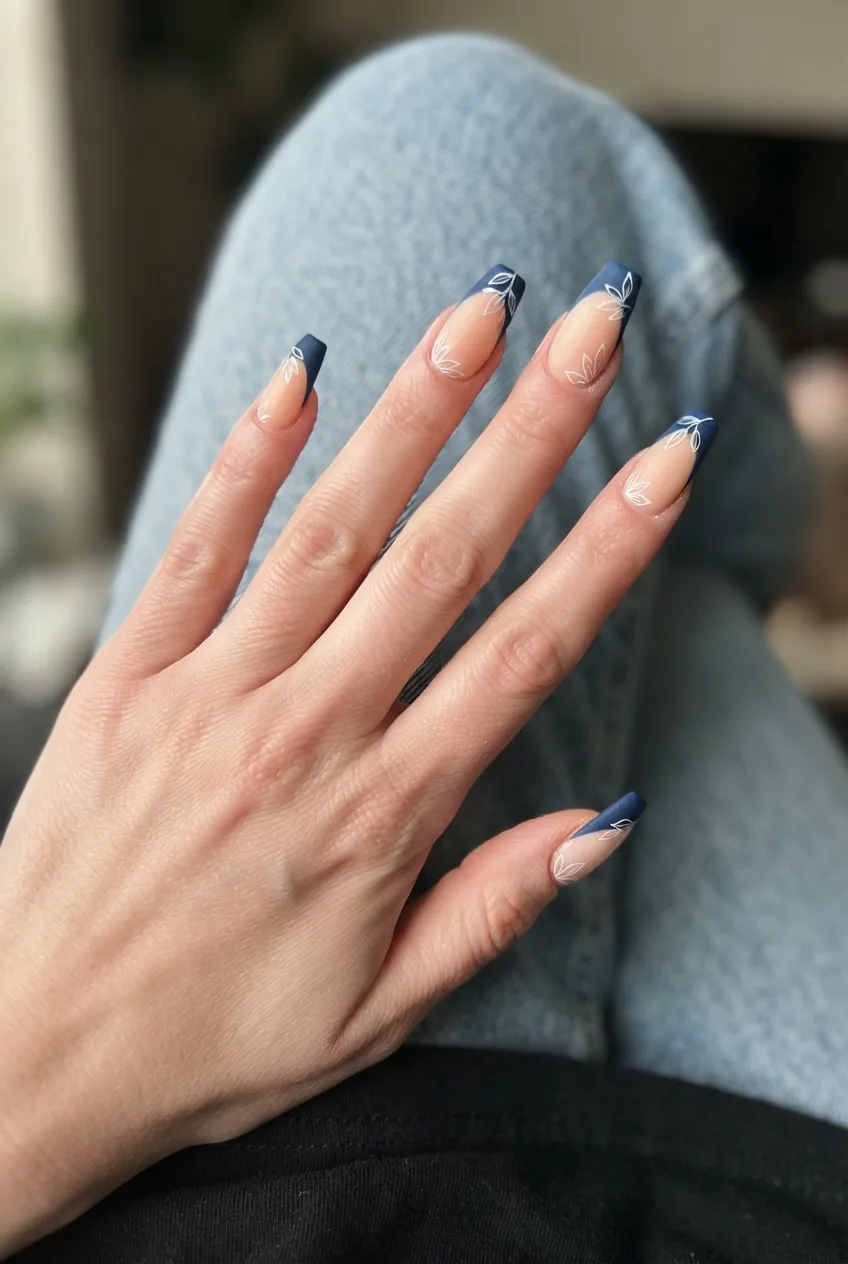
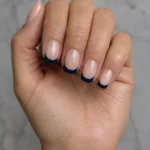
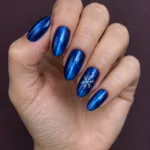
1. Matte Navy Coffin With Petal Tips
Navy plus matte is a combination most people skip because they assume it reads heavy. It doesn’t here. The matte topcoat flattens the shine so the tiny white petals sit on top like chalk marks, crisp and slightly raised looking. Coffin length gives the tip enough surface to fit a full flower without crowding it. One warning: matte topcoat picks up hand cream and oil fast, so keep a cuticle oil routine away from the nail plate itself, or plan to redo the top layer within a week. 🌙
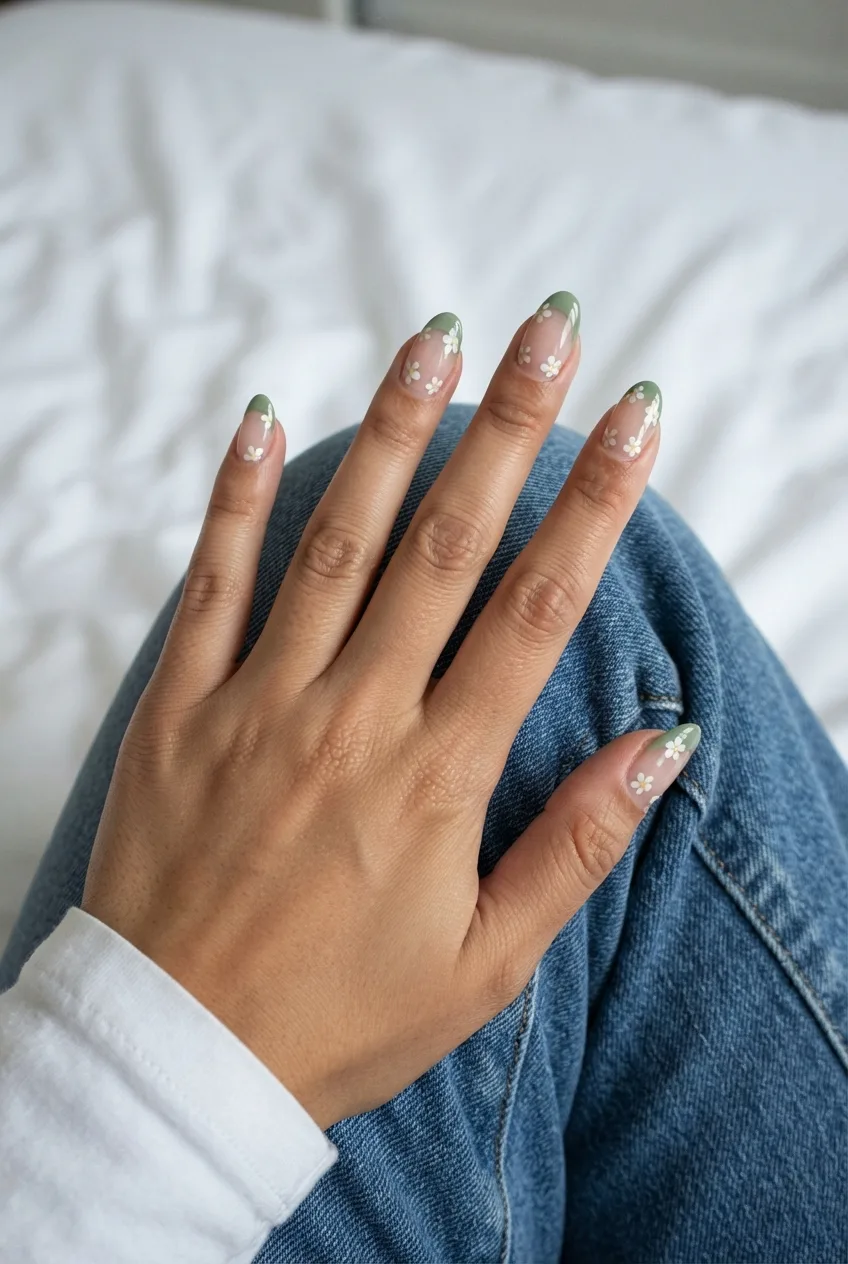
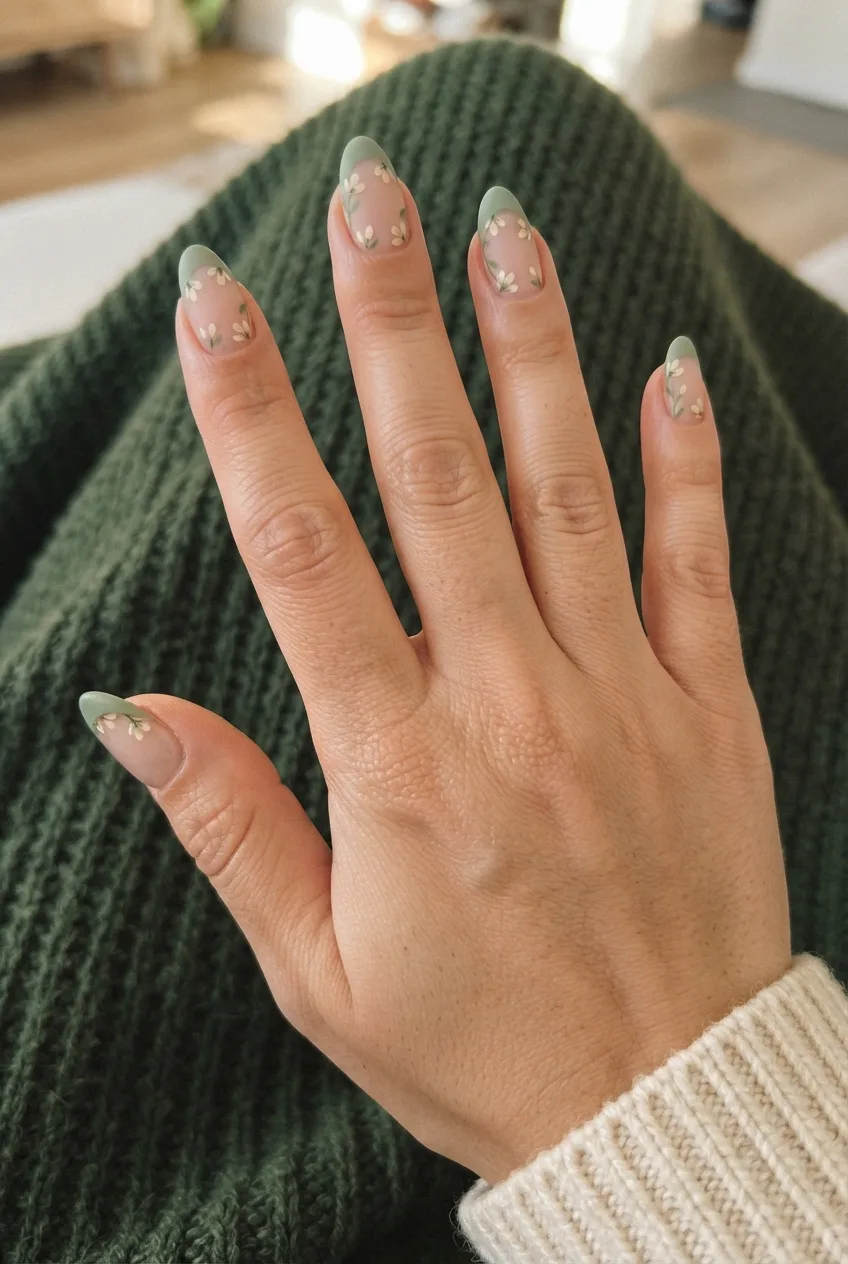
2. Sage Oval, Barely There Flowers
Sage is the easiest green to wear because the grey in the undertone stops it from going neon. On an oval shape the curved edge follows the petal curve naturally, so a slightly wobbly flower still looks deliberate. This is the one I’d point at if someone asked how to do simple spring floral nails at home for the first time. Two coats of sage, let it cure fully, then five white dots dragged inward with a toothpick. Low length required, works fine on nails that only just clear the fingertip.
Try it on See it on your own hand Take a photo of your hand and Nartie puts any design from this page on your own nails, so you can choose before you book.

 NartieTry it on your hand
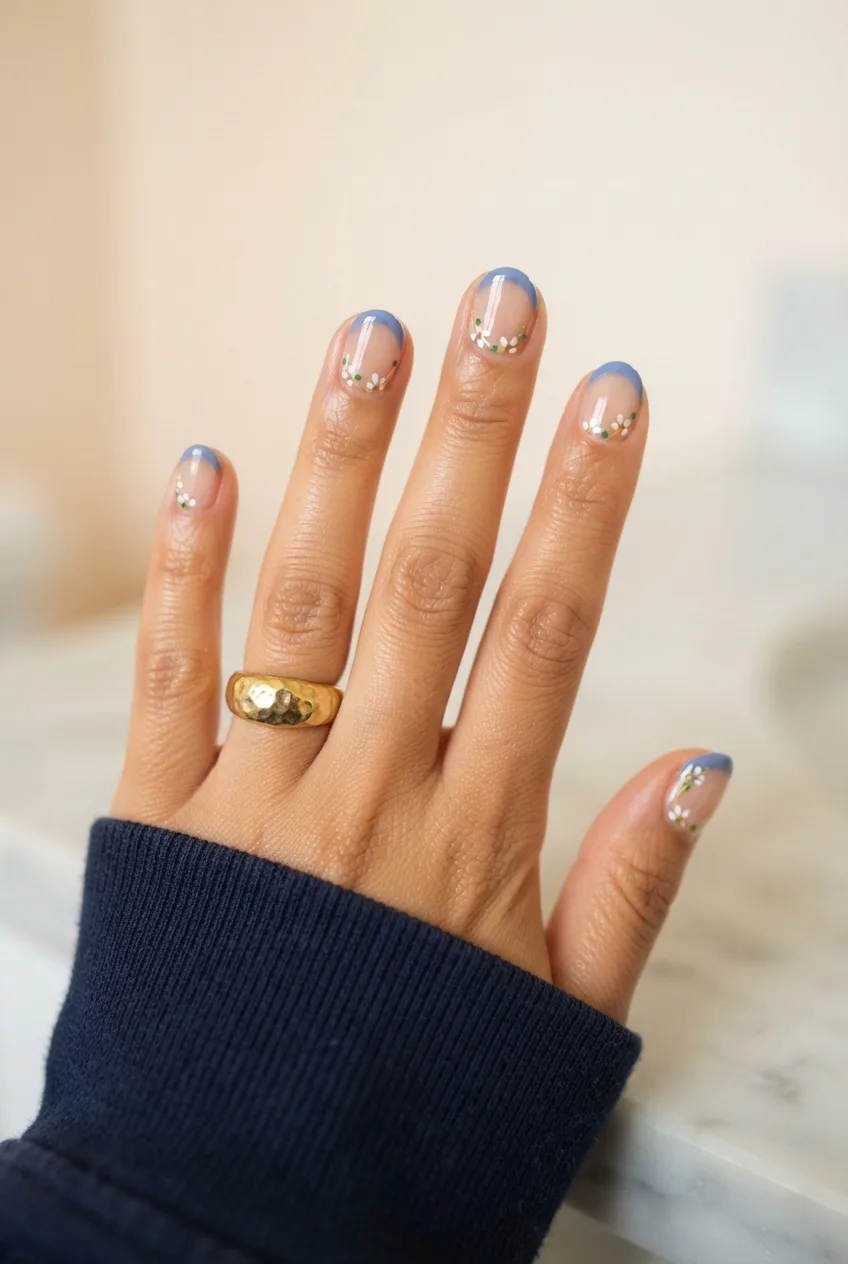
3. Periwinkle Round Tips With Scattered Blooms
Periwinkle is the sleeper color of this whole set. It sits between blue and lavender, which means it flatters cool and neutral undertones without the flatness of a straight pastel blue. Round tips keep everything soft, and round is also the most forgiving shape for anyone who types all day. The flowers are scattered rather than lined up, so uneven spacing is a feature. Good candidate for gel if you want the color depth to hold past day four.
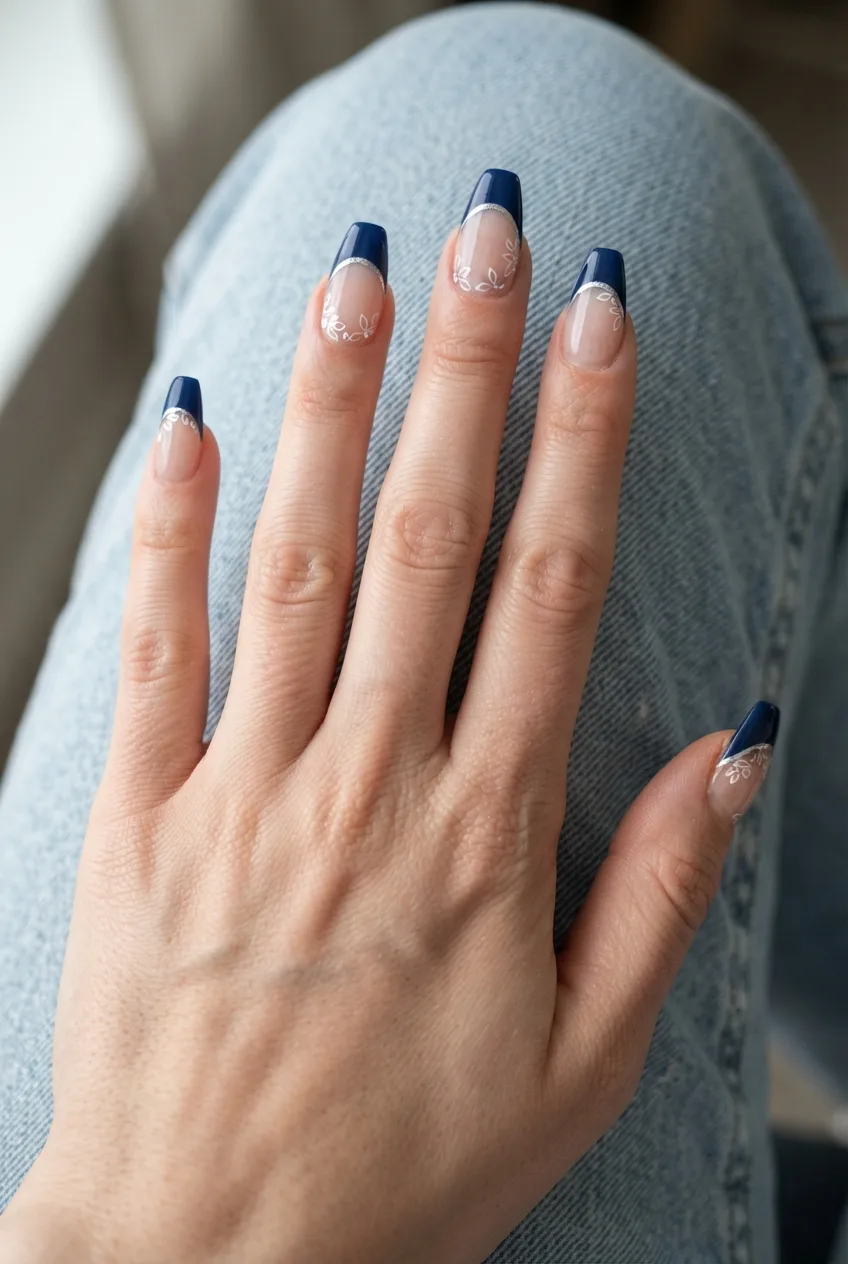
4. Outlined Petals on Navy Coffin
Same navy base as earlier, different technique. Here the petals are outlined instead of filled, which is genuinely harder. Thin outlines expose every hand tremor, and a toothpick is not ideal for continuous line work. If you want this exact look, a 00 liner brush is worth the four dollars. The payoff is real though: the negative space inside each petal lets the navy show through and the whole thing reads more like embroidery than nail art. Long coffin is doing a lot of the work, so short nails will lose the effect. ✨
5. Coral Oval With Stems
The stems are what separate this from a hundred other petal manicures. One thin green line pulling down from each cluster gives the flower somewhere to grow from, and that single detail makes the design look designed. Coral leans warm and peachy rather than orange, so it plays well with tanned hands and gold jewelry. Worth saving as simple spring floral nail inspo to show a nail tech, because the stem angle is the part people get wrong when they freehand it.
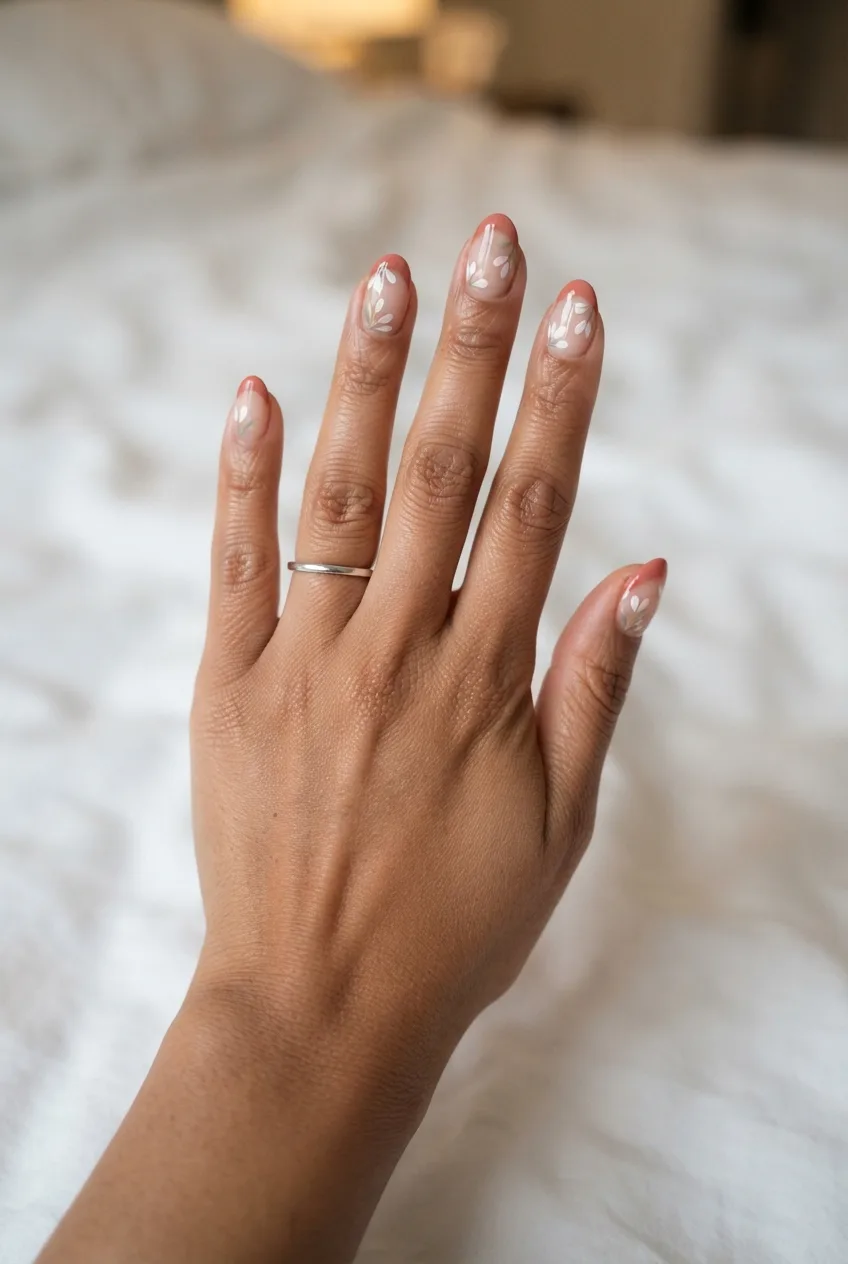
6. Teal Squoval Daisies
Daisies are the most beginner friendly flower that exists. Yellow dot in the middle, five white dots around it, done. Against teal the white pops hard and the yellow center keeps it cheerful instead of clinical. Squoval is the practical choice here because the flat tip gives the daisy a stable place to sit, no distortion at the curve. If your teal is streaky on the first coat, that’s normal for saturated blue greens, just plan on three thin layers instead of two. Related color territory if you want alternatives: the green nail designs list.
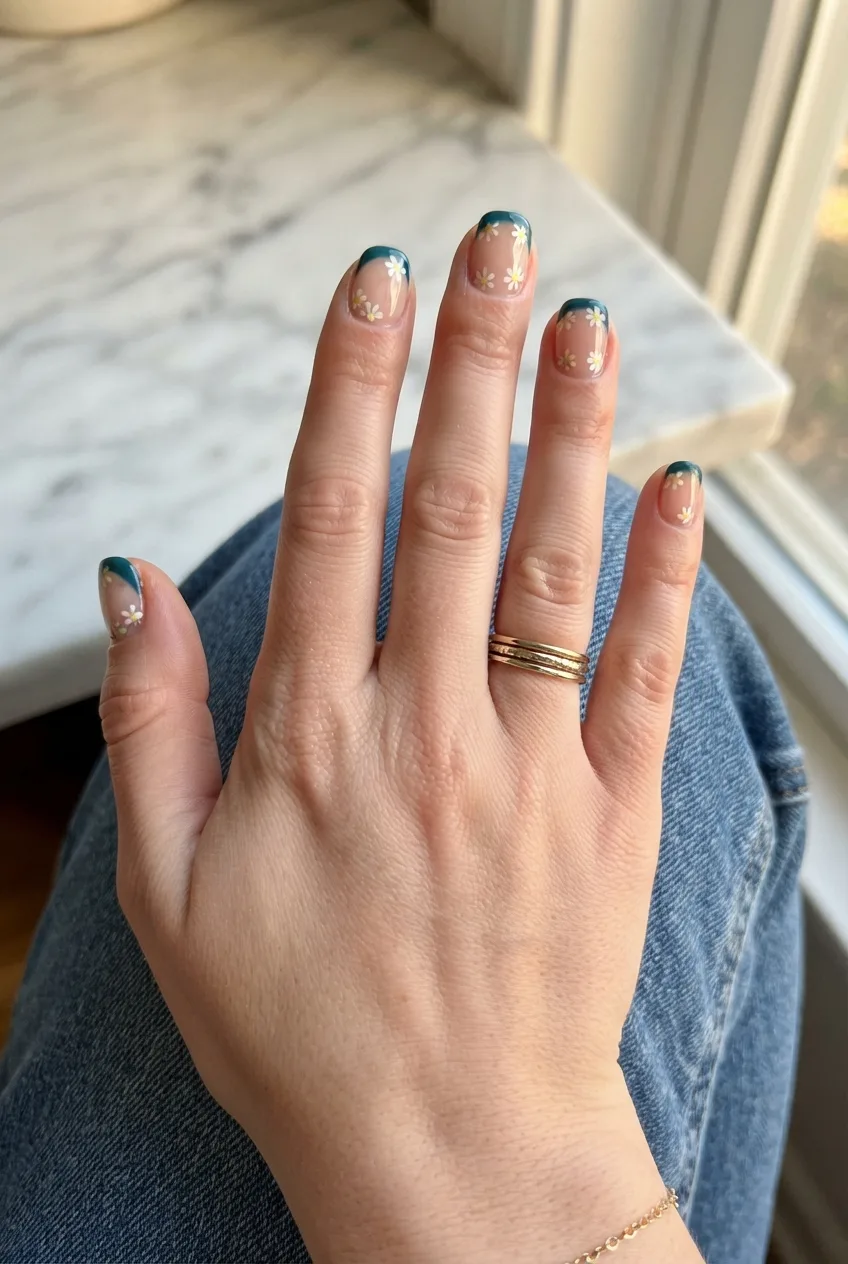
7. Butter Yellow Coffin With Glazed Petals
Butter yellow is having a long moment and this is the softest way to use it. The petals sit under a pearl finish so they catch light rather than sitting flat, which gives the whole nail that milky glazed sheen. Coffin length lets the glaze stretch and shift as your hand moves. Fair warning: pearl and chrome powders show ridges, so buff the surface properly before you build. Which of these two finishes would you actually commit to, matte or glazed? 🧈
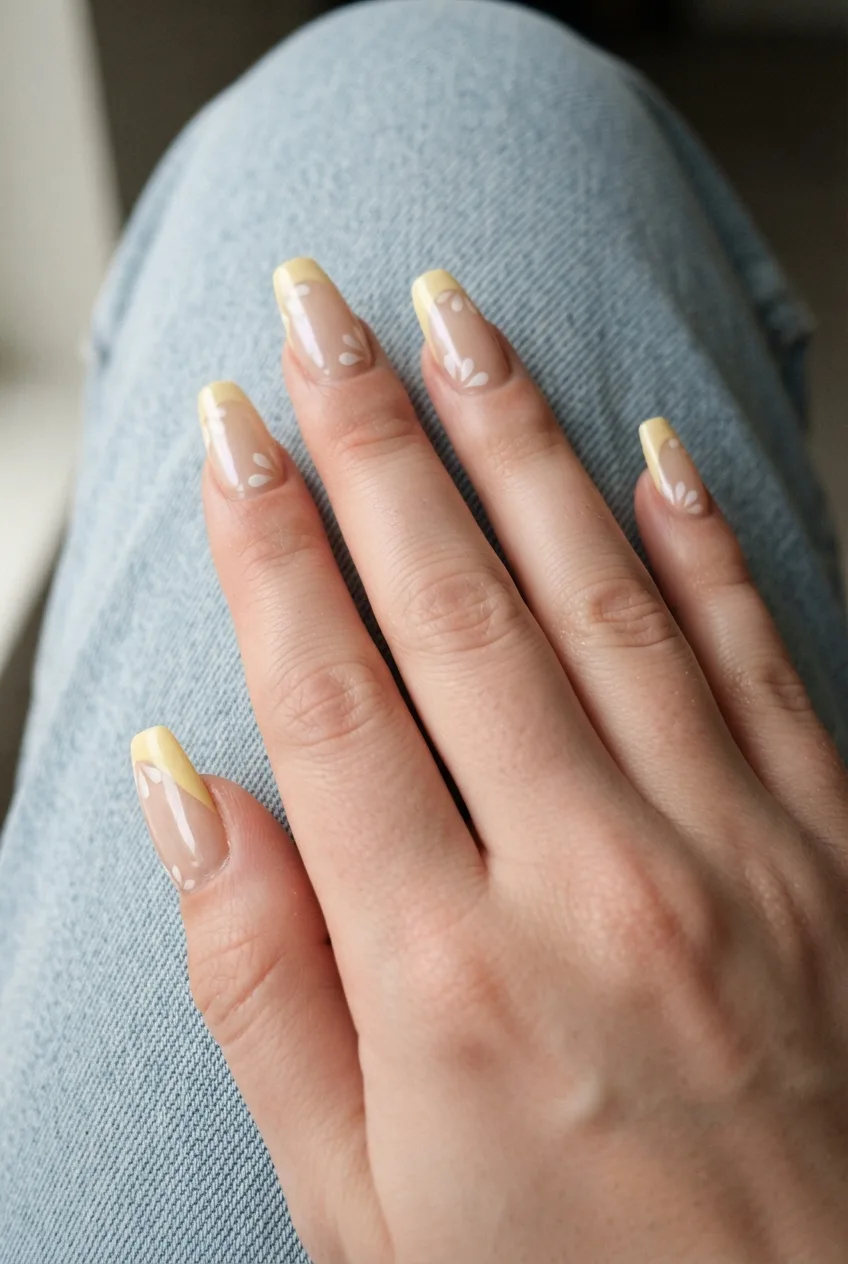
8. Periwinkle Almond French With Petal Tips
Almond nails do something square tips can’t: they stretch the smile line into a soft curve, so the petals painted along the edge look like they’re following the nail rather than sitting on top of it. The periwinkle here reads cool and slightly grey, which flatters pink and neutral undertones better than a true blue would. Tip placement is the whole job. Keep the flowers hugging the outer third and let the base stay bare. 🌸 A toothpick handles the five-dot petals fine, but the curved edge means you need a steady angle, so brace your pinky on the table.
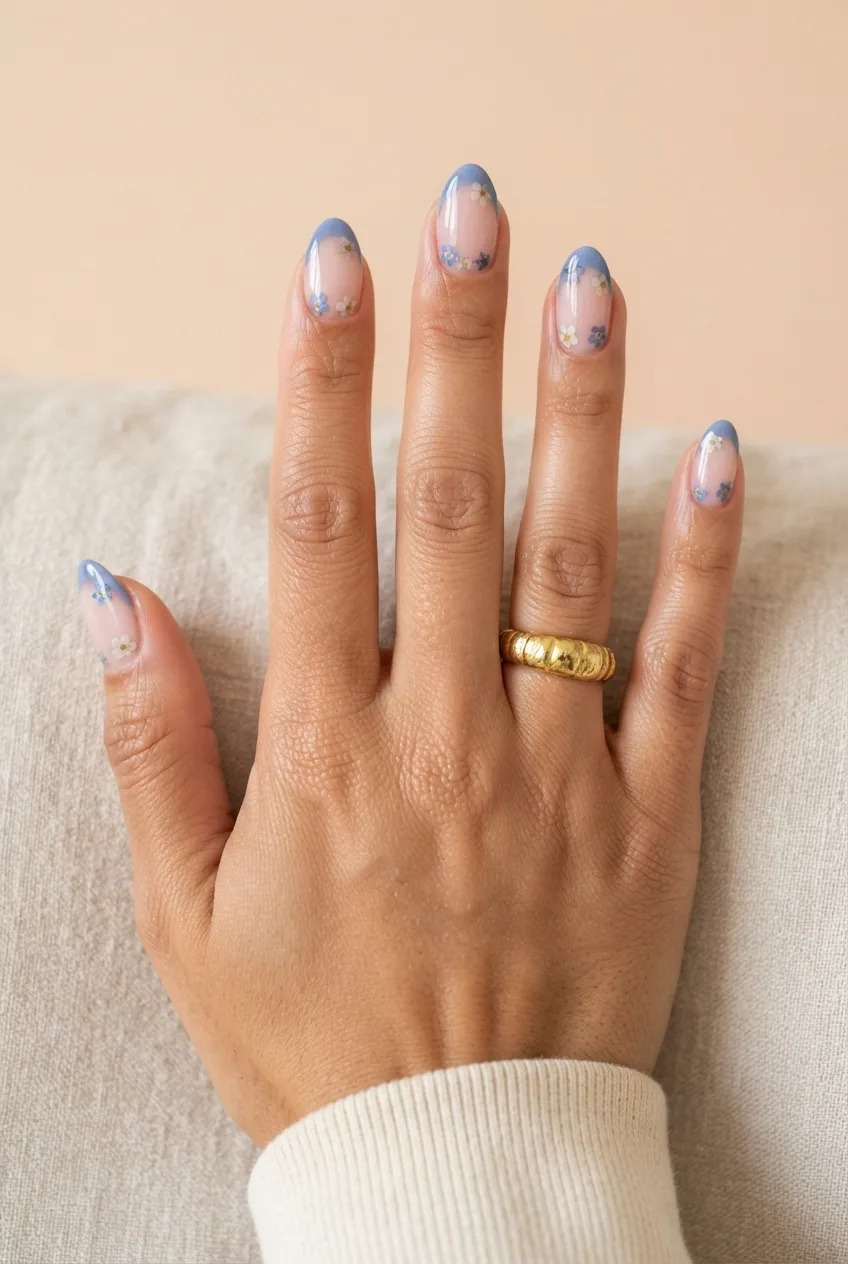
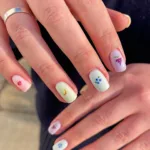
9. Squoval Daisies on Periwinkle
Same color family as the last one, completely different energy. The flat squoval edge gives the daisies a straight runway to sit on, which is why this is the version I’d point a beginner toward. No curve to fight. Five white dots, one yellow center, done. If you’re figuring out how to do simple spring floral nails at home and your dots keep drifting, this shape forgives more than almond or coffin. Works at short length too, which almost nothing in the french tip category actually does.
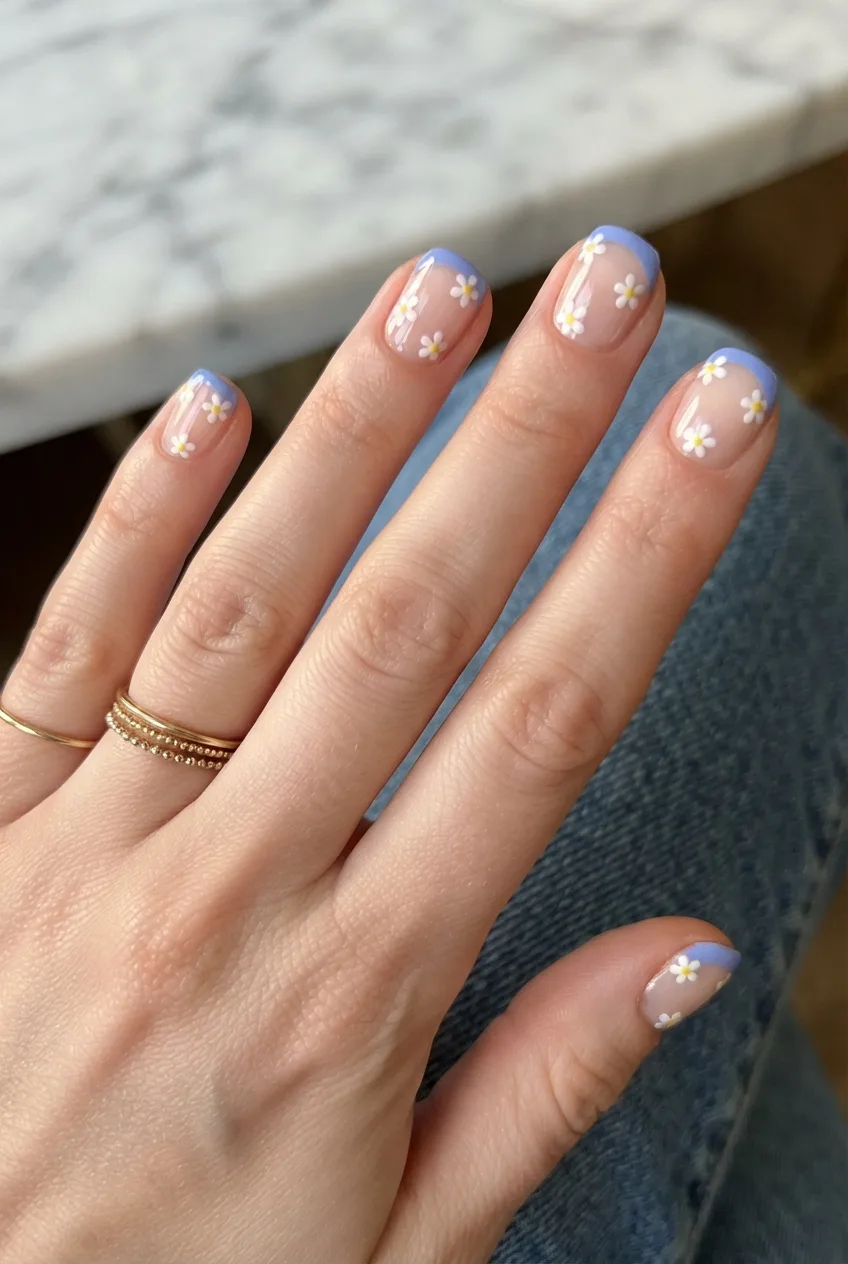
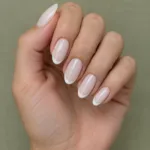
10. Pearl White Coffin, Glazed and Flowered
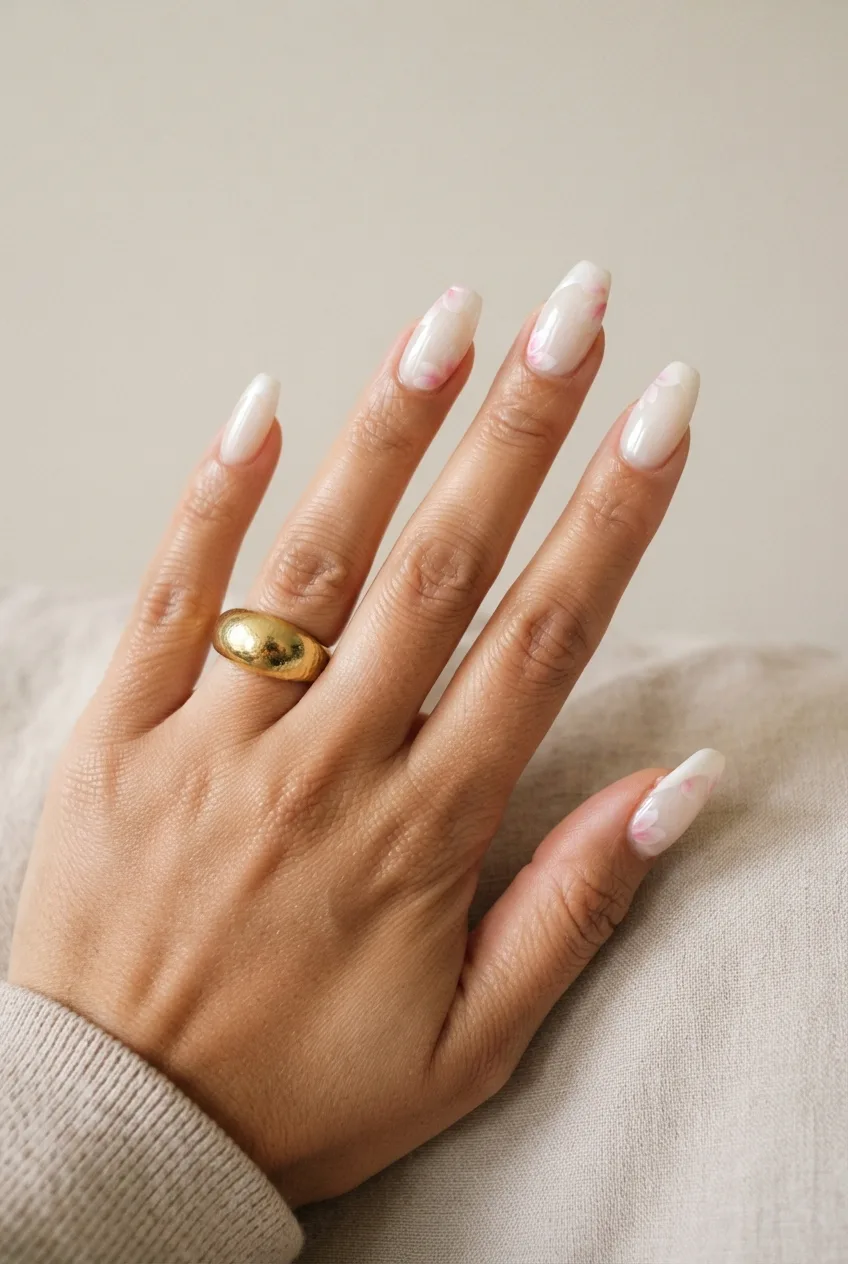
The pearl finish is doing the heavy lifting here, and it needs length to justify itself. Coffin nails give you that long flat plane where the glaze shift actually travels as your hand moves. Flowers are subtle, almost buried under the topcoat, and that’s the right call because a loud floral on a pearl base turns muddy fast. This one is a salon ask. Chrome or pearl powder needs a gel base and a proper cure, and the buffing has to be even or you get patches. Book it, don’t DIY it. If you like this direction, the glazed donut nails roundup has more of the same finish.
Get this look at homeShop the look
- Navy blue gel polishSee on Amazon ›
- Sage green nail polishSee on Amazon ›
- Periwinkle nail polishSee on Amazon ›
- Matte top coatSee on Amazon ›
- Dotting tool setSee on Amazon ›
As an Amazon Associate I earn from qualifying purchases. These links open Amazon search results, so you can pick the shade and brand you like.
11. Navy Oval With Floral Tips
Navy on an oval nail always looks more expensive than it costs. The oval softens what could read severe, and the pale flowers on the tip break up the darkness before it gets heavy. Worth noting: dark polish shows regrowth faster than anything else, so this is a two week manicure at best before the cuticle gap starts announcing itself. Wear it when you have something on the calendar. The white florals need two coats to sit opaque over navy, and skipping that’s where most home attempts go grey.
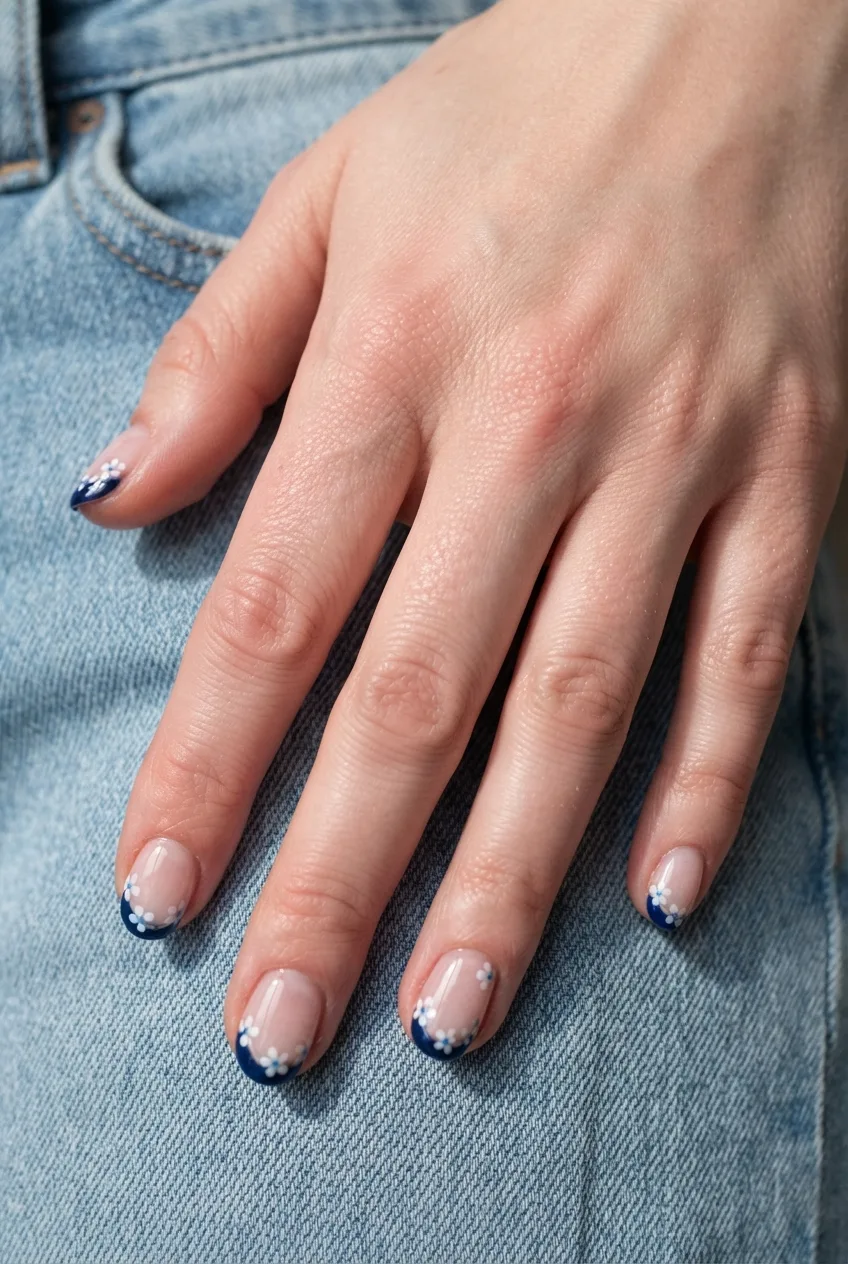
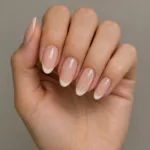
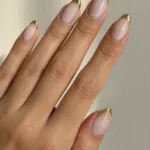
12. Blush Round Tips With a Glazed Finish
Round nails plus blush plus glaze is about as low risk as spring nail art gets. The shape is short, sturdy, and grows out invisibly, which makes this the practical pick in the whole set. Blush leans warm, so it sits beautifully on olive and golden skin and can look slightly washed out on very fair cool tones. Sizing down the flowers matters on a round tip, since there’s less real estate before the curve drops off. Good simple spring floral nail inspo if you type at a keyboard all day and hate chips. ✨
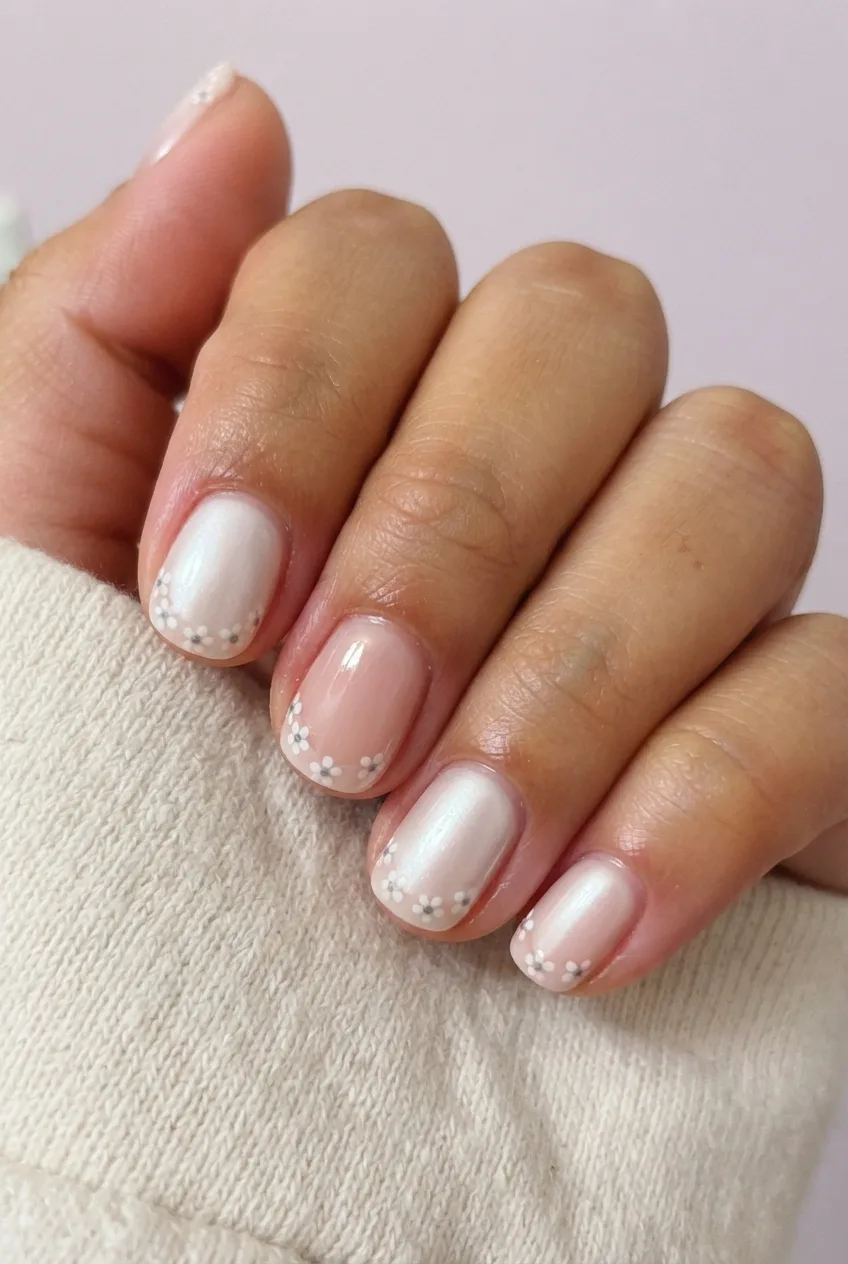
13. Matte Sage Almond With Tip Florals
Matte sage is the quiet one and it earns it. The flat finish kills all reflection, so the tiny florals along the almond tips read as texture instead of shine, which is a completely different look from every glossy version above. Maintenance warning though: matte topcoat picks up oil from your skin and hand cream leaves visible smudges. You’ll be wiping these constantly. Sage also skews yellow, so it’s most flattering on warm and neutral undertones. Almond length needs a bit of free edge to hold the shape, so grow them out a week before you book.
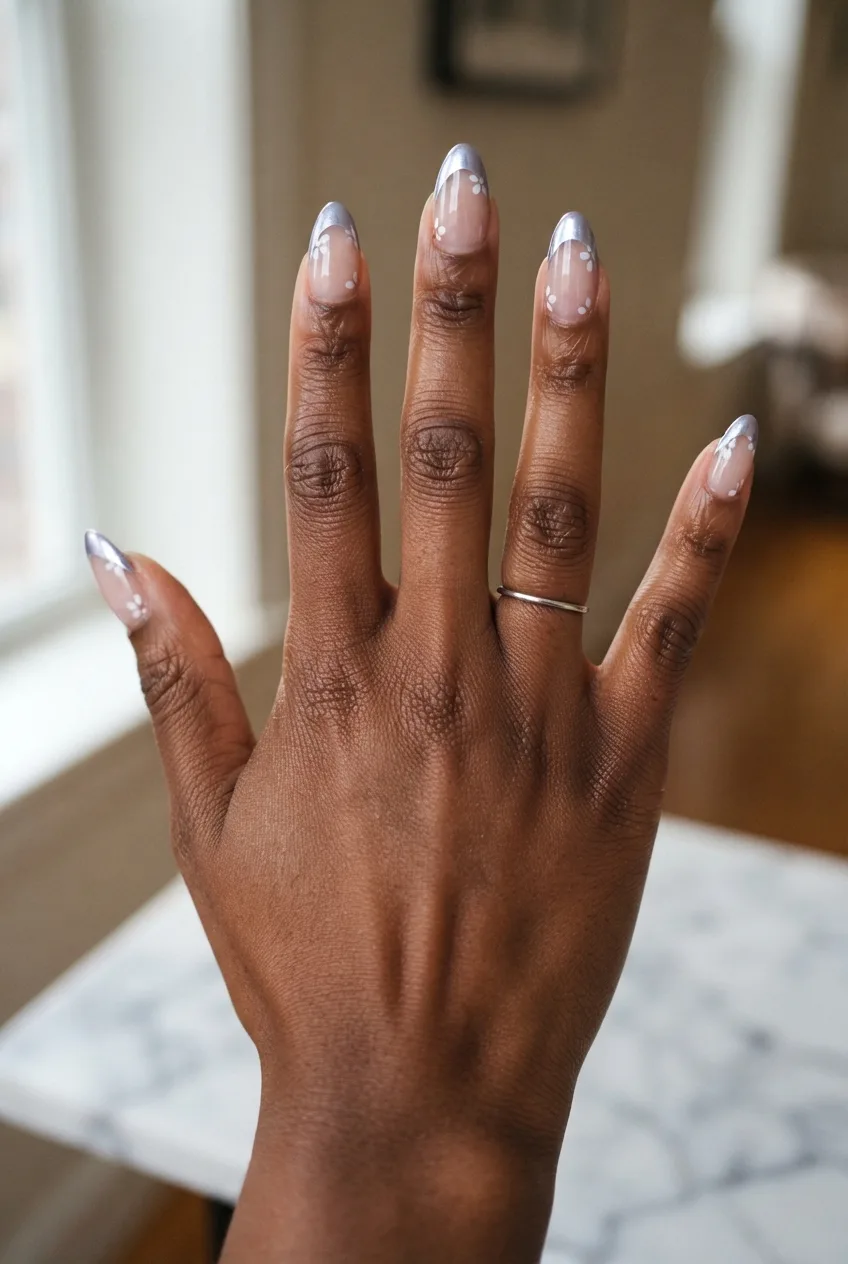
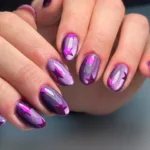
14. Lavender Chrome Almond, Floral Edged
Chrome over lavender gives you that oil slick shimmer that shifts pink and silver depending on the light, and on an almond shape it travels the full length of the nail. The florals are placed right at the tip so they don’t compete with the metallic. This is the most technical design in the group. Chrome powder demands a no wipe gel topcoat, a perfectly smooth base, and a tech who knows how to seal the free edge or it peels in days. Not a DIY afternoon. Pair it with silver rings and skip the gold, the undertone clash is real. 💜
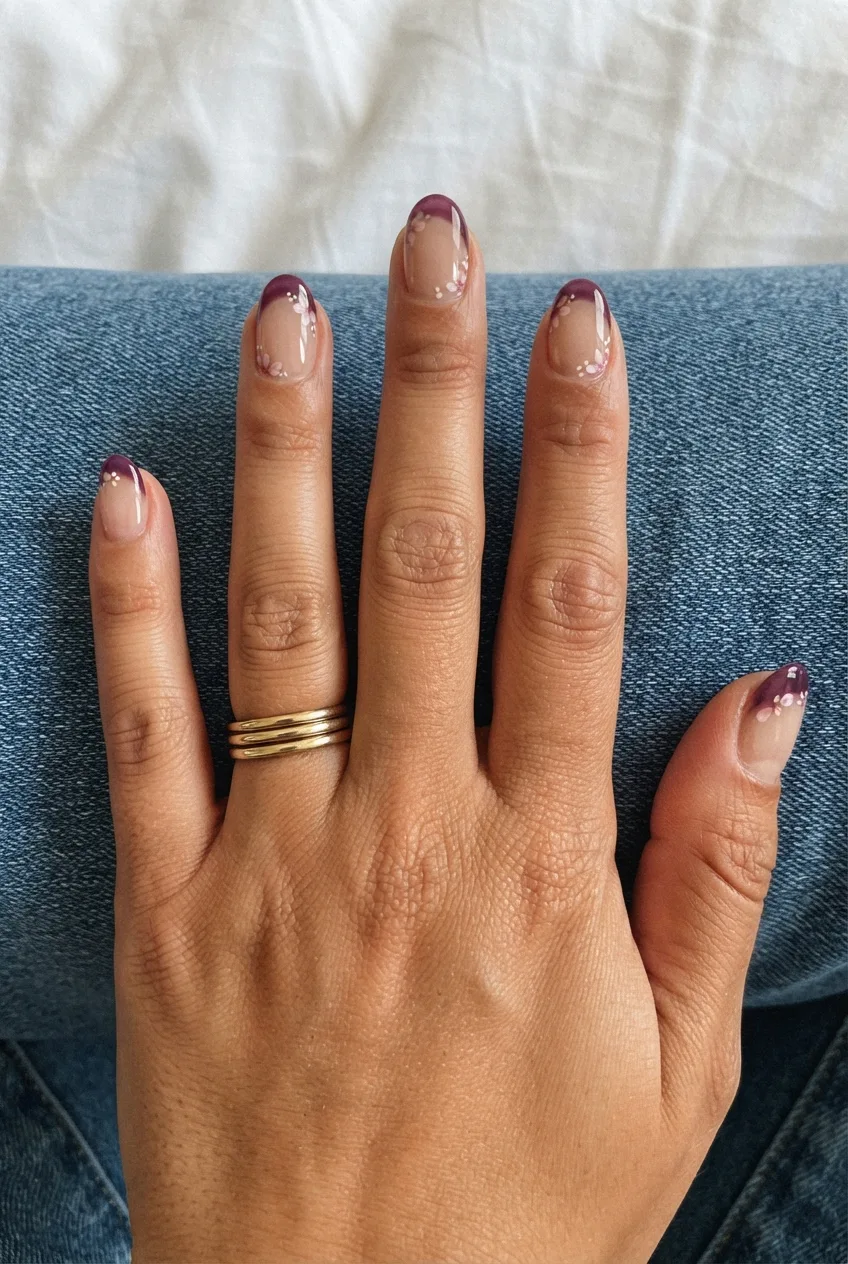
15. Plum Jelly Ballerina With Petal Tips
Jelly plum is the sleeper hit of this whole roundup. The color has that translucent, stained glass depth where you can still read the nail plate underneath, so it never goes heavy or goth. Tiny white petals sit right on the ballerina tip, which keeps the eye at the edge and makes the length look intentional rather than long for the sake of it. You need decent extension for ballerina to hold its shape, so this is a builder gel or tip situation. Jelly finishes do need two or three coats to reach this saturation, and thin even layers matter more than speed 🍇
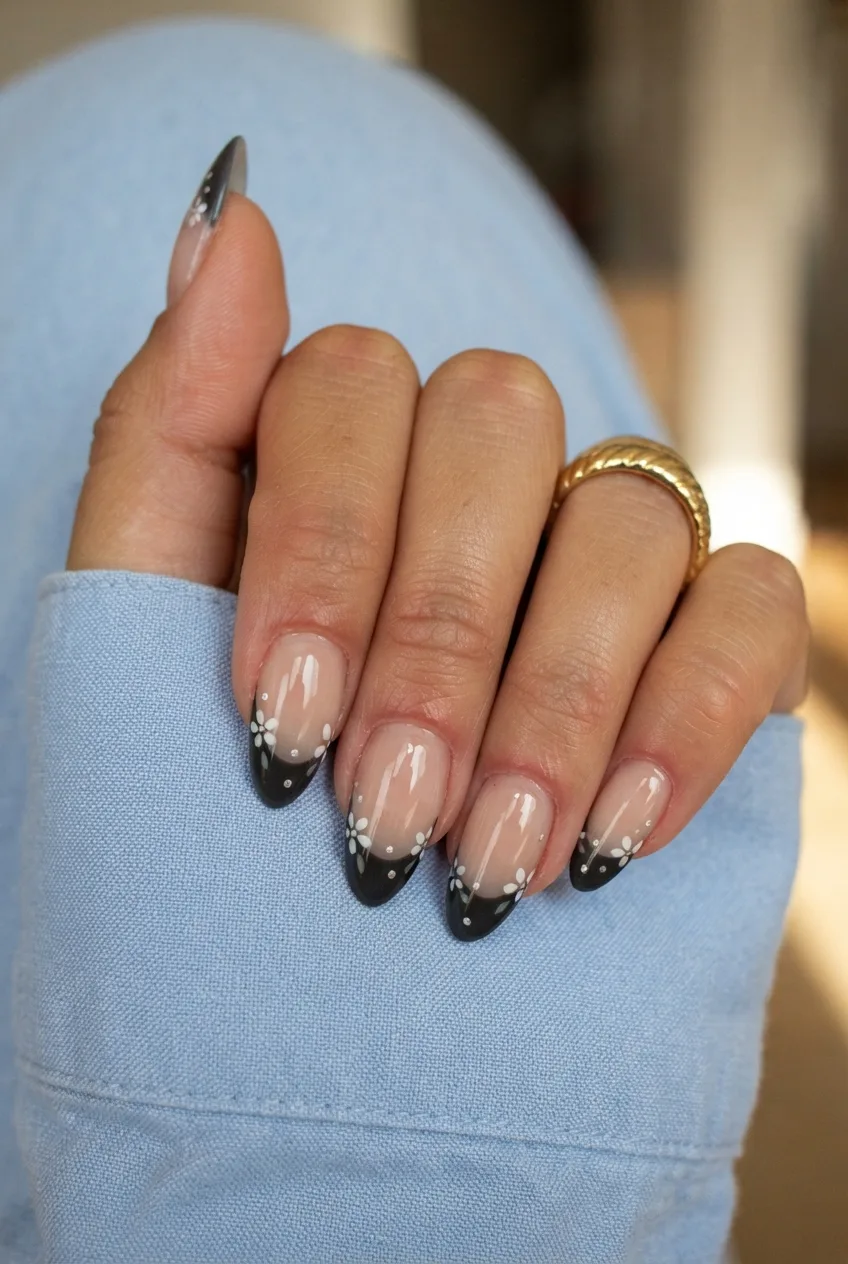
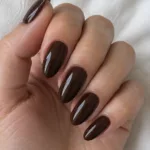
16. Charcoal Almond With White Petal French
Charcoal base, white petals, no negotiation. This is the moodiest set here and the one that reads best under office lighting, where softer pastels wash out completely. The white has to be fully opaque or it turns grey against the dark base, so use a dense white art gel rather than a thin striper polish. Almond keeps the whole thing from feeling severe. Cool undertone skin wears charcoal beautifully; if you run warm, ask for a slightly brown leaning charcoal instead. Grow out shows fast on dark bases, so plan a two week refresh.
17. Satin Teal Squoval With Floral Tips
Satin finish is the detail worth stealing here. It sits between matte and gloss, so the teal keeps its depth without the chalky flatness a full matte topcoat gives you. Squoval means short nails work fine, which makes this one of the better simple spring floral nails for short nails in the batch. The florals are painted at the tip only, so your cuticle line stays clean and grow out is forgiving. One caution: satin topcoats scuff. Keep a cuticle oil in your bag and skip the hand sanitizer marathon.
Try it on See it on your own hand Take a photo of your hand and Nartie puts any design from this page on your own nails, so you can choose before you book.NartieTry it on your hand
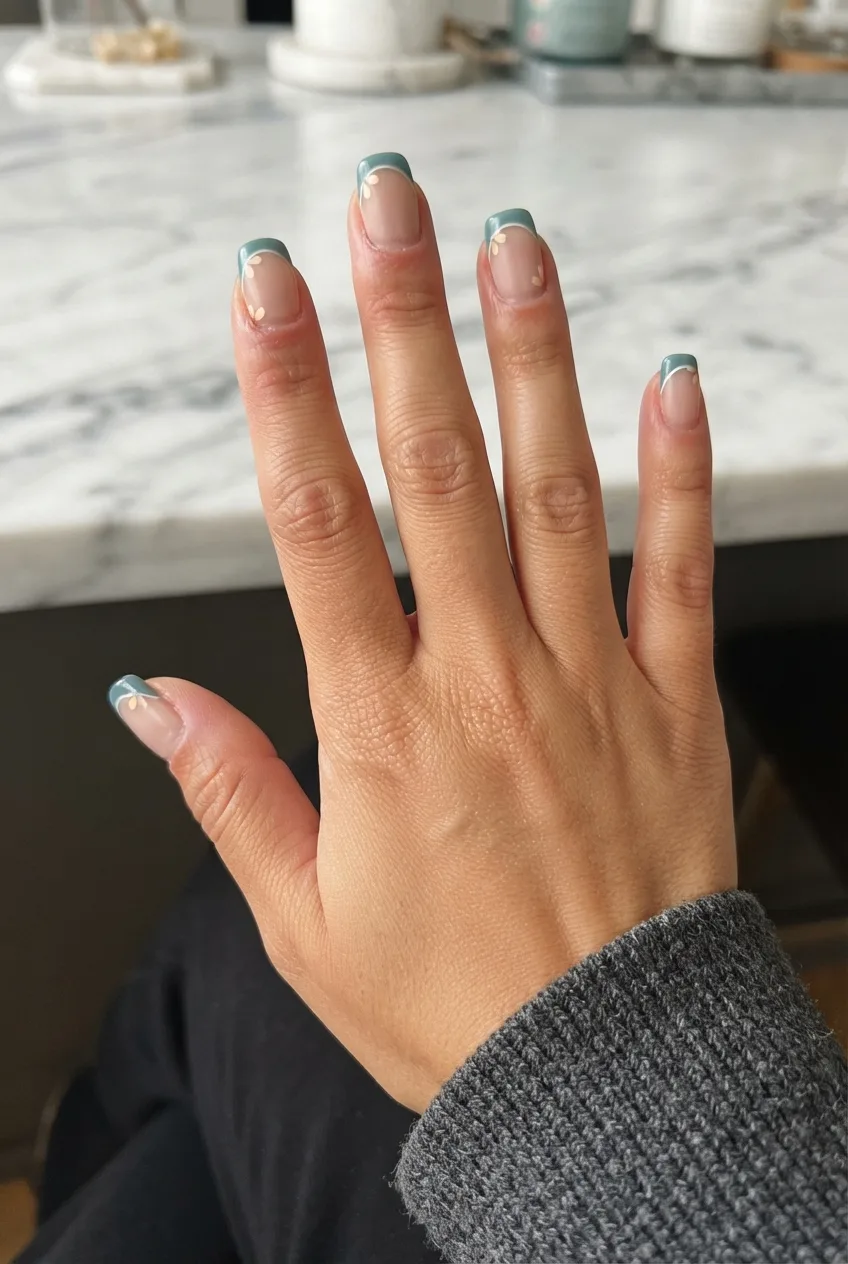
18. Dusty Rose Almond in Velvet
Velvet, not chrome, not matte. The pigment shifts as your hand moves, which gives the dusty rose a soft brushed suede quality that photographs far better than it sounds. Florals sit low key over the top, almost tone on tone, so this stays wearable for work or a wedding guest slot. Velvet effects come from magnetic gel, which means a lamp and a magnet and a nail tech who knows how to pull the pattern evenly across ten nails. Not a first attempt at home 🌸
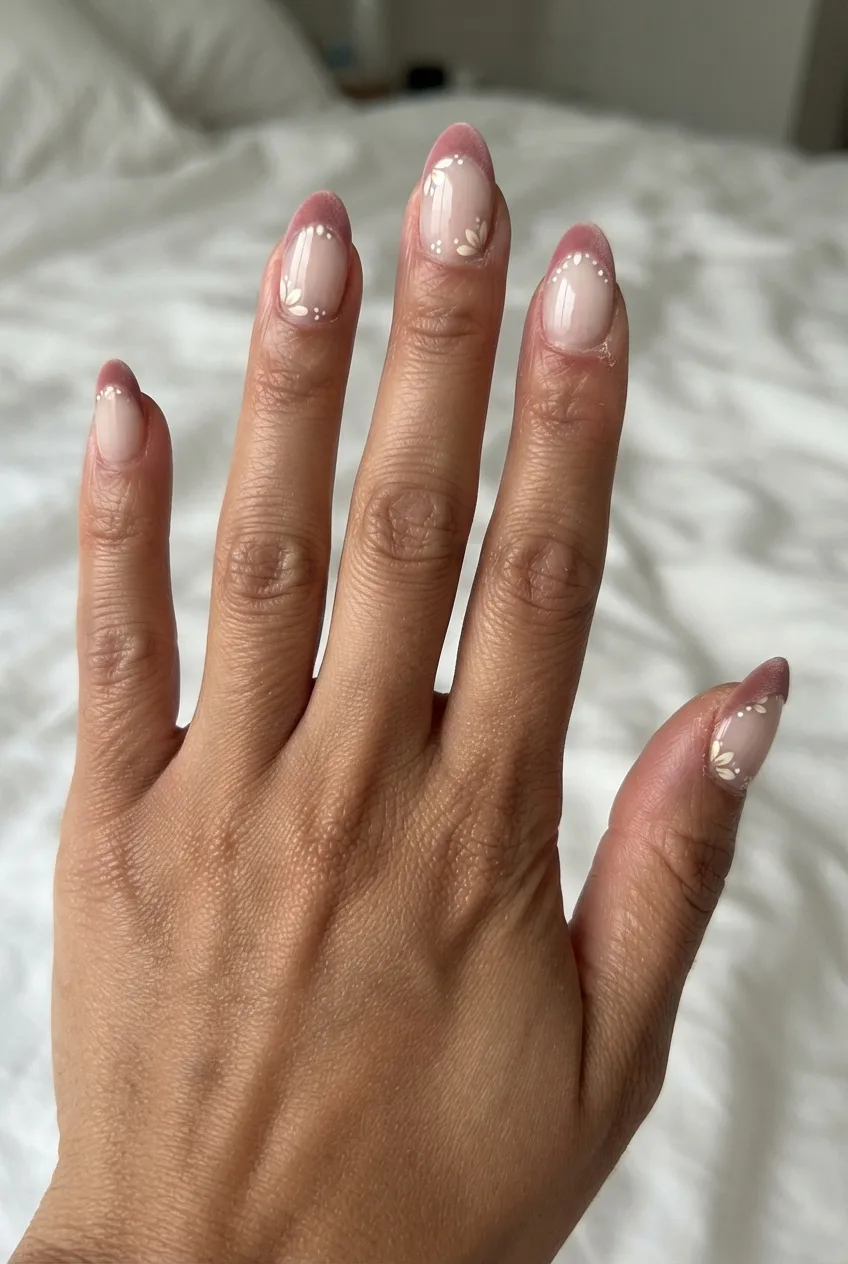
19. Lilac Almond French With Blossom Tips
If you want one set from this list that works as a genuine simple spring floral nail art tutorial for a beginner, it’s this one. Lilac base, white french line, five dot petals clustered near the tip. A toothpick handles the petals fine because they’re small and slightly irregular by design. Almond shape stretches the bed so even medium length looks elongated. The lilac here leans cool and slightly greyed, which is more grown up than a candy purple and stays flattering into late summer.
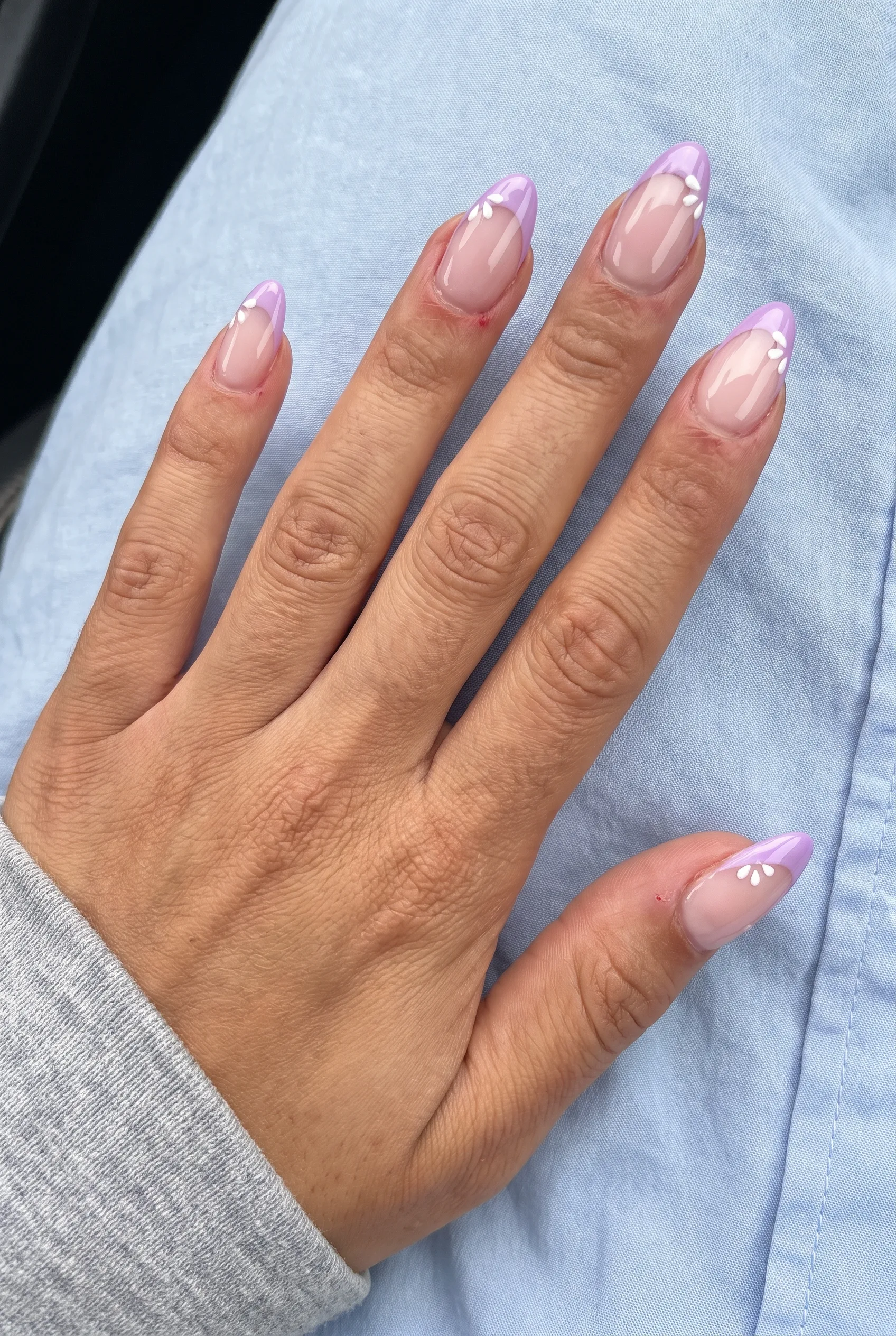
20. Periwinkle Squoval, Floral French Finish
Ending on the most wearable set here. Periwinkle sits between blue and lavender, so it flatters almost every undertone, and the squoval shape means you can wear this to a classroom, an office, or a keyboard without snapping a corner. The floral french is loose and hand painted, tiny petals scattered along the smile line instead of a rigid stripe. That looseness is what saves it from looking like a nail wrap. For gel simple spring floral nails, ask for a glossy topcoat rather than matte, because periwinkle needs the shine to stay bright 💙
—
Which Nail Shape Works Best for simple spring floral nails?
Almond is the shape I would pick nine times out of ten. The taper narrows the tip, which means a floral cluster placed at the free edge reads as one deliberate detail instead of a crowded row of dots. It also stretches the nail bed visually, so pale bases like lilac, sage and dusty rose stay light instead of pooling into a heavy block of color. You need a little length past the fingertip to get the taper, roughly a quarter inch, but no more than that.
Coffin and ballerina need commitment. The flat tip gives you the widest painting surface of any shape, which is why the plum jelly and butter yellow sets in this post carry so much detail without looking busy. The tradeoff is length. Coffin under medium length loses the shape entirely and just looks like a stubby square, and jelly or glazed finishes need those extra millimetres to show their depth. If you type all day or you’re back in a classroom this month, skip it.
Oval and round are the quiet performers. Oval keeps a soft curved edge that suits stems, trailing vines and anything painted vertically up the nail rather than across the tip. it’s also the most forgiving shape for regrowth, since the curve disguises the line at the cuticle for an extra week. Round works on genuinely short nails and pairs best with single blossoms placed slightly off center, one flower per nail, nothing more.
Square and squoval are where simple spring floral nails get practical. The straight tip gives you a clean guideline for a french smile line, so your petals sit in a neat row without any freehand guessing. Squoval softens the corners just enough to stop the shape looking blocky, and it survives daily wear better than any pointed alternative. On square, keep florals small and low contrast, because a hard tip plus a hard color edge can look graphic rather than soft.
—
Frequently Asked Questions
What is simple spring floral nails?
Simple spring floral nails are pastel or soft toned manicures with small hand painted blossoms, usually placed at the tip or scattered lightly across a sheer base. The palette leans lilac, periwinkle, sage, butter yellow and dusty rose, and the flowers are deliberately minimal, often just five dots and a center. The point is restraint, not a full garden.
Is simple spring floral nails in style for 2026?
Yes, and the finish is what has moved on. Flat cream florals have given way to glazed, satin and velvet bases, with the flower work sitting quietly on top rather than competing. Late summer 2026 is pushing deeper bases too, charcoal, plum jelly, teal, which extends the look well past spring.
How do I make simple spring floral nails last longer?
Cap the free edge with your topcoat, every single time. Painted florals near the tip are the first thing to chip, and sealing that edge buys you an extra week easily. Apply topcoat only once the art layer is fully cured or bone dry, otherwise you will drag the petals into smears.
How do I achieve simple spring floral nails at home?
A toothpick and a dotting motion is genuinely all you need for the flower work. Load a small bead of white polish, press five dots in a circle, then add a contrasting center dot once the petals set slightly. This is beginner level difficulty as long as your base coat is fully dry first, and working on one nail at a time stops the dots spreading.
What nail length looks best with simple spring floral nails?
Short to medium is the sweet spot, roughly level with your fingertip to a quarter inch past. Short nails keep the florals tight and charming, especially in a tip only placement. Long nails give the base color more room to show depth, which matters for jelly and velvet finishes, but they also demand more flowers to avoid a lot of empty space.
Are simple spring floral nails good for beginners?
Yes, this is one of the most beginner friendly nail art styles there is. Five dot flowers are forgiving because real blossoms are not symmetrical, so slight wobble actually helps. If you want a shortcut, paint florals on only two accent nails and leave the rest as plain color.
—
Save the two or three sets that actually suit your length and shape, then pin them so you have something concrete to show at your appointment. If you want more soft season inspiration, the simple spring nail designs roundup pairs well with this one, and floral nails that look like spring magic goes deeper on the flower work itself. For shape specific ideas, the almond nail designs collection and the french tip nails post cover the two techniques doing most of the heavy lifting here. Which one are you booking first? 🌷
#GleamyNails
Some photos in this post are AI-created concept images, made to show colors, shapes and nail art together. How we create our images


Pingback: 18 Leopard Print Nails for Autumn: Caramel & Black
Pingback: How to Pick a Nail Shape for Your Hands (Easy Guide)
Pingback: 22 Goth Spring Nails That Prove Dark Energy Works in Bloom | Gleamy Nails
Pingback: Spring Nail Trends 2025: 15 Looks Everyone Wants
Pingback: Fresh & Trendy 15 Spring Nail Designs | Gleamy Nails
Pingback: Spring Nail Colors 2026: 24 Shades to Try Now
Pingback: 29 Simple Spring Nail Designs Anyone Can Copy