Now Reading: Best Nail Shape for Short Fingers: Almond vs Squoval Test
-
01
Best Nail Shape for Short Fingers: Almond vs Squoval Test

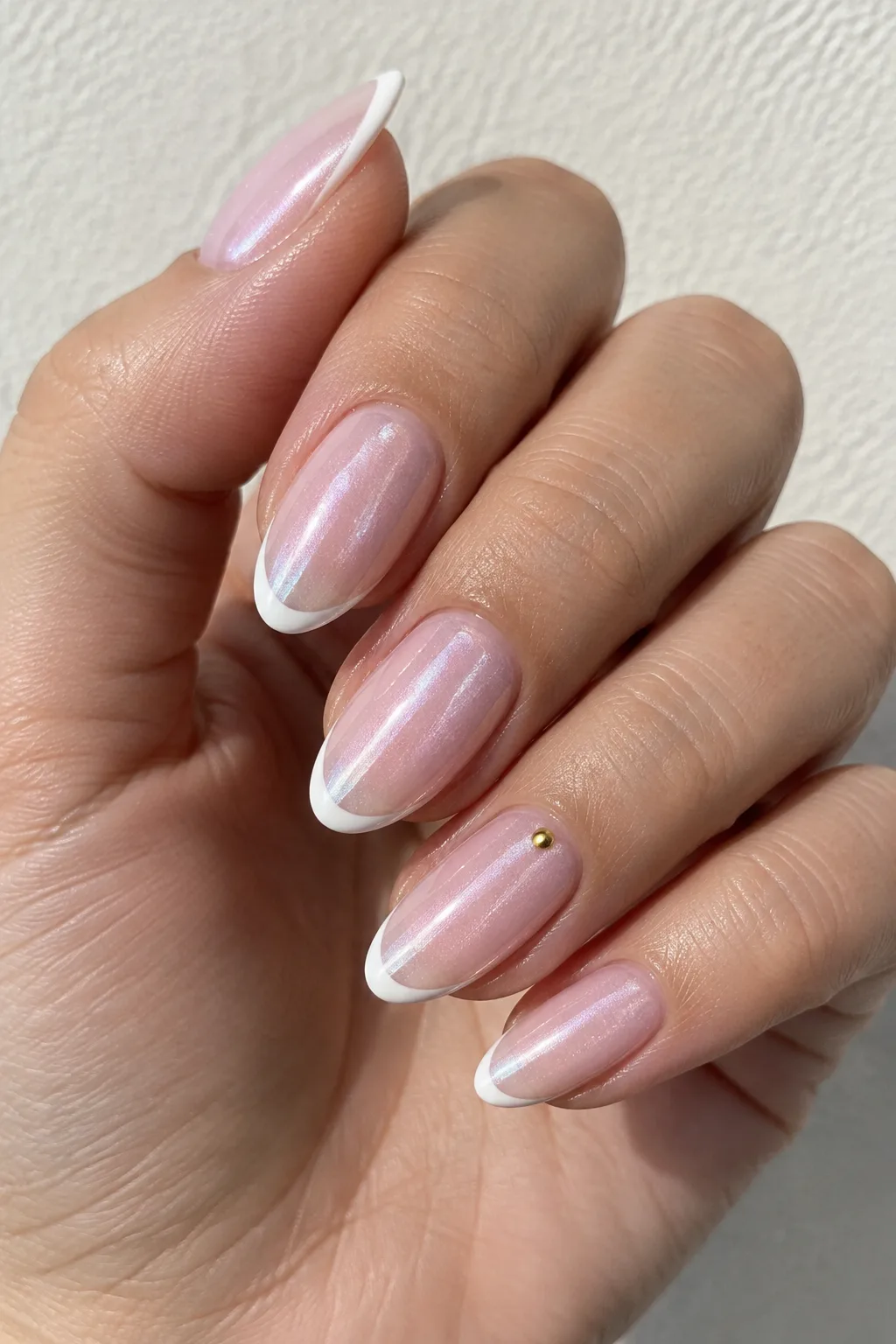
In short: The best nail shape for short fingers is almond, because the tapered sides and soft point pull the eye upward and make the whole finger read longer. If you want something lower maintenance, a tapered squoval or a soft oval gives a similar stretch with less breakage. Skip wide flat squares and very round tips, since both cut the nail off visually and make short fingers look even shorter.
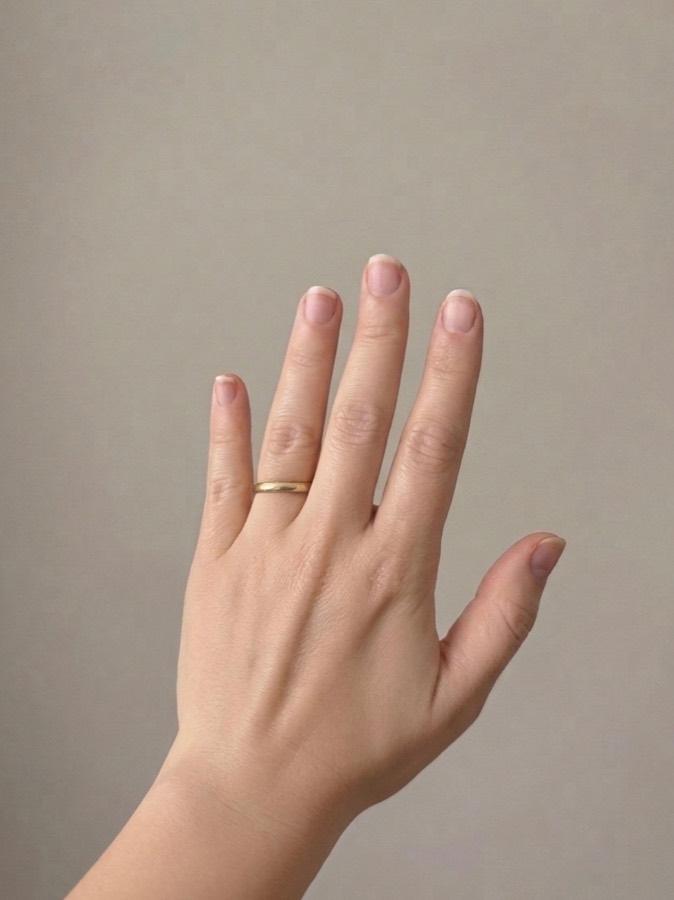
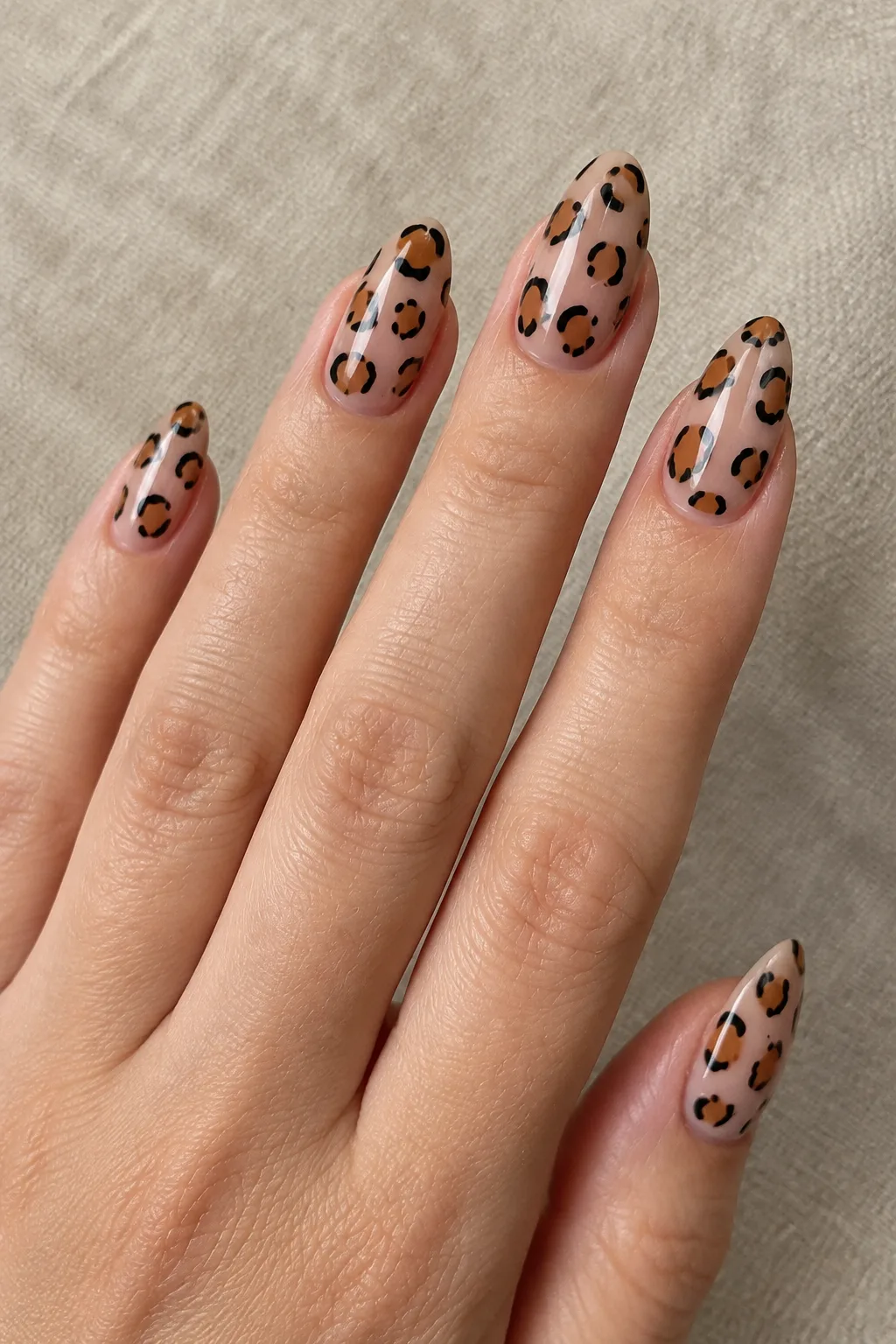
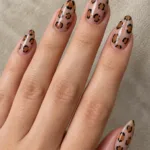
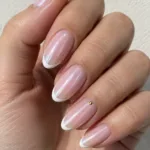
If you have short fingers, almond is the shape that will flatter them most. The sides taper in, the tip is soft and narrow, and that slim line tricks the eye into reading your finger as longer than it is. Oval and a tapered squoval come next, and they’re both easier to maintain if you type all day.
Below you’ll find how each shape actually behaves on a short finger, which ones to avoid, and a quick test you can do tonight with a nail file and five minutes.
 Try it on
See this one on your own hand
Take a photo of your hand and the app puts this design on it, so you know how it sits on your nail shape before you book.
Try it on
See this one on your own hand
Take a photo of your hand and the app puts this design on it, so you know how it sits on your nail shape before you book.
 NartieTry this design
Why Some Nail Shapes Make Short Fingers Look Shorter
Your eye follows lines. A nail with straight tapered sides creates one long vertical line from cuticle to tip, so your finger and nail read as one piece. A wide, flat tip does the opposite. It draws a hard horizontal line across the top and chops the finger in half.
Nail bed width matters too. Short fingers often come with wide, short nail beds. Any shape that keeps that width all the way to the tip will look stubby, no matter how long you grow it. The fix isn’t always more length. It’s narrowing the sides.
Three things do the heavy lifting: tapered sidewalls, a small amount of free edge (3 to 5 mm is plenty), and a color that doesn’t cut the nail short. Get those right and even a modest manicure looks elongated.
Best Nail Shapes for Short Fingers, Ranked
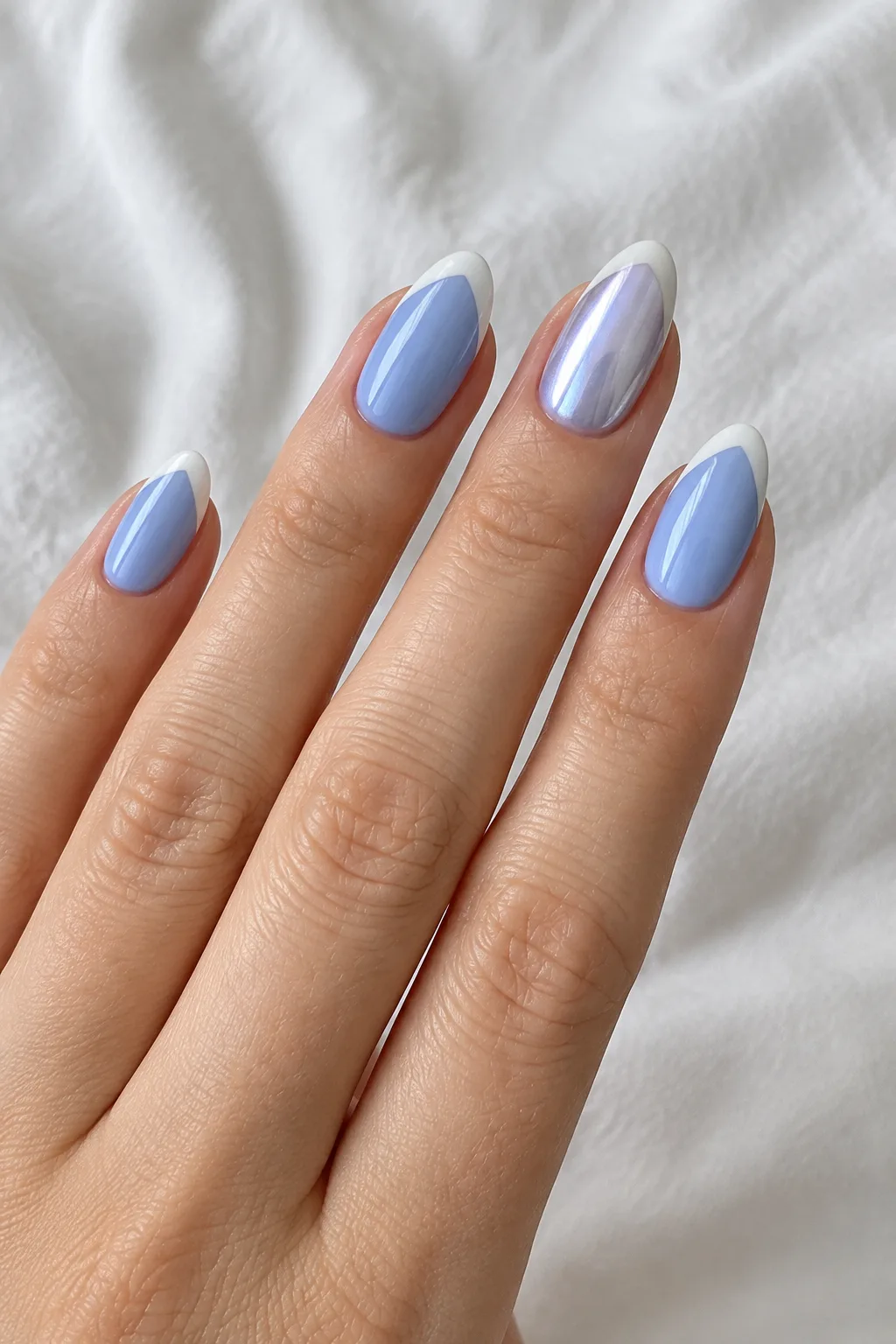
1. Almond
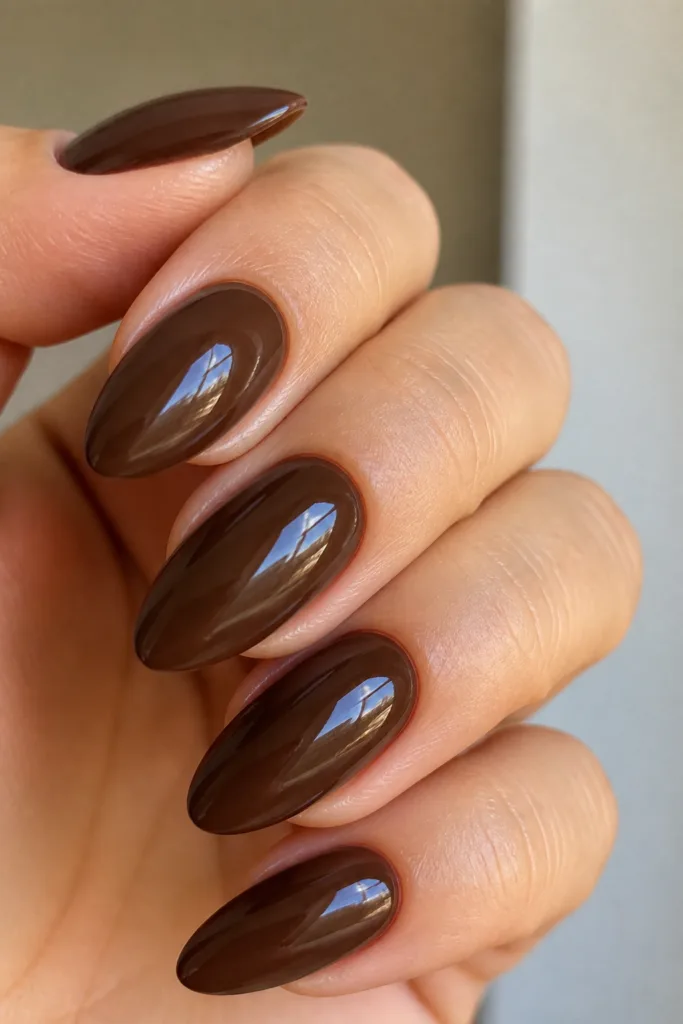
This is the winner. Almond files in from both sides and ends in a rounded point, like a real almond. On a short finger it adds the illusion of about half a knuckle of length. Keep it modest: 4 to 6 mm past the fingertip is enough. Longer almond on short fingers can start to look claw-like and gets hard to type with.
Ask for almond with a soft tip, not a sharp one. A sharp point snaps on car doors and zippers.
2. Soft Oval
Oval is almond’s easygoing cousin. Same tapered sides, but the tip is a smooth curve instead of a point. It looks neat on natural nails, it doesn’t catch on fabric, and it’s the shape most people can grow without tips or gel extensions. If you work with your hands, pick this over almond.
3. Tapered Squoval
A squoval is a square with the corners filed off. The trick for short fingers is to file the sidewalls in slightly so the tip is narrower than the base. That one change makes a huge difference. A standard wide squoval looks blunt. A tapered one looks slim and modern, and it’s much stronger than almond.
4. Ballerina (Short Version)
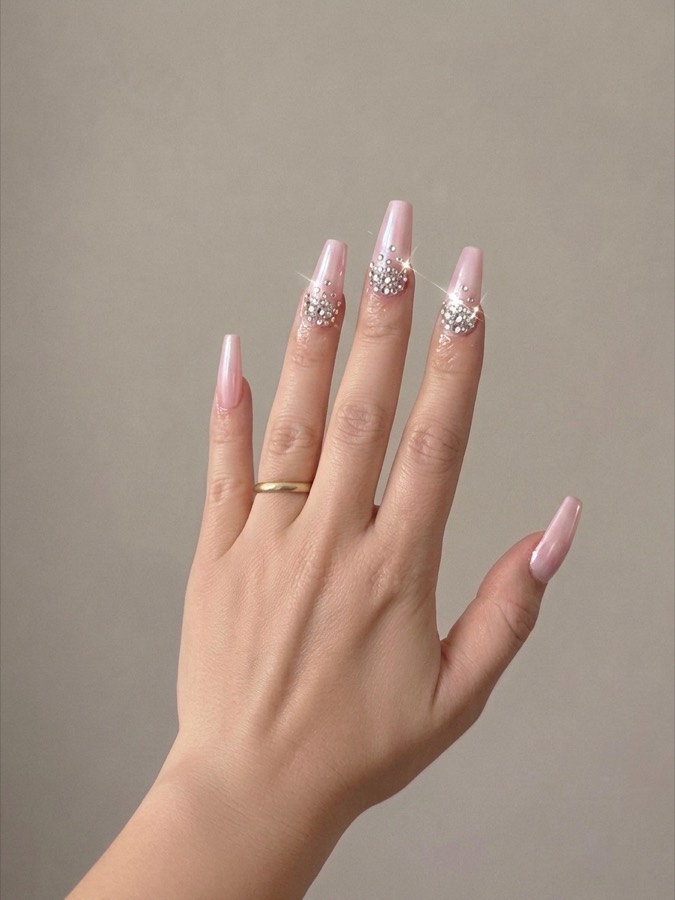
Ballerina, also called coffin, tapers in and then ends flat. Kept short, around 5 mm of free edge, it gives you the slim sidewalls without the point. Long coffin is a different story: the wide flat tip at the end starts working against you.
5. Rounded (Best Super-Short Option)
If you keep nails at or just past the fingertip, plain round is your friend. It follows your natural cuticle curve, so nothing looks off balance. It won’t lengthen much, but it never looks stubby either. Great for anyone in healthcare, sports, or a job with gloves.
6. Soft Stiletto (For Special Occasions)
The most lengthening shape of all, but also the least practical. A short stiletto with a softened point works for a wedding or a trip. Don’t commit to it for daily life if you’ve never worn a point before. You’ll knock one off in week one.
Shapes to Skip on Short Fingers
- Wide short square. Straight sides plus a flat tip equals two horizontal lines. It makes wide nail beds look wider.
- Very round and very short. Cut right down to the skin with a deep curve, nails look like little circles. The finger loses its line completely.
- Long wide coffin. The flat end is often wider than the base. That’s the opposite of what you want.
- Flared tips. If your natural nail flares out at the free edge, don’t follow that shape when you file. File the sidewalls straight or slightly in instead.
None of these are banned. They just need adjusting. A square looks fine on short fingers if you narrow the sides and leave a little free edge showing.
Almond vs Squoval: The Side-by-Side Difference
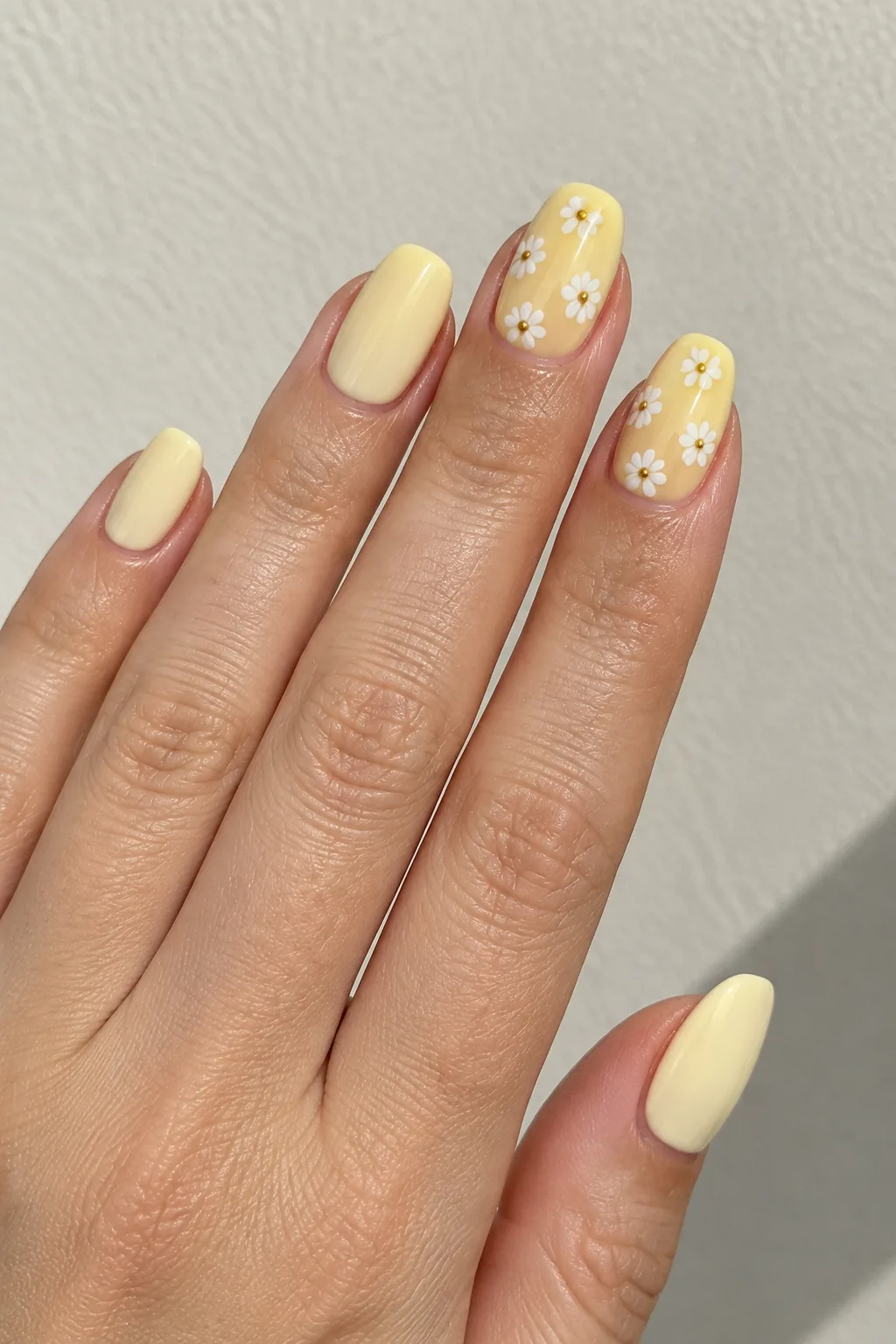
People search this comparison more than any other, so here’s the honest breakdown.
Try it on
See this one on your own hand
Take a photo of your hand and the app puts this design on it, so you know how it sits on your nail shape before you book.
NartieTry this design
- Lengthening effect: almond wins clearly. Squoval adds a little, tapered squoval adds more.
- Strength: squoval wins. The wider tip spreads pressure, so it chips and cracks less on natural nails.
- Grow-out: almond needs a refile every 2 weeks or the point goes off center. Squoval stays neat longer.
- Daily life: squoval for typing and lifting. Almond if you mostly tap a phone.
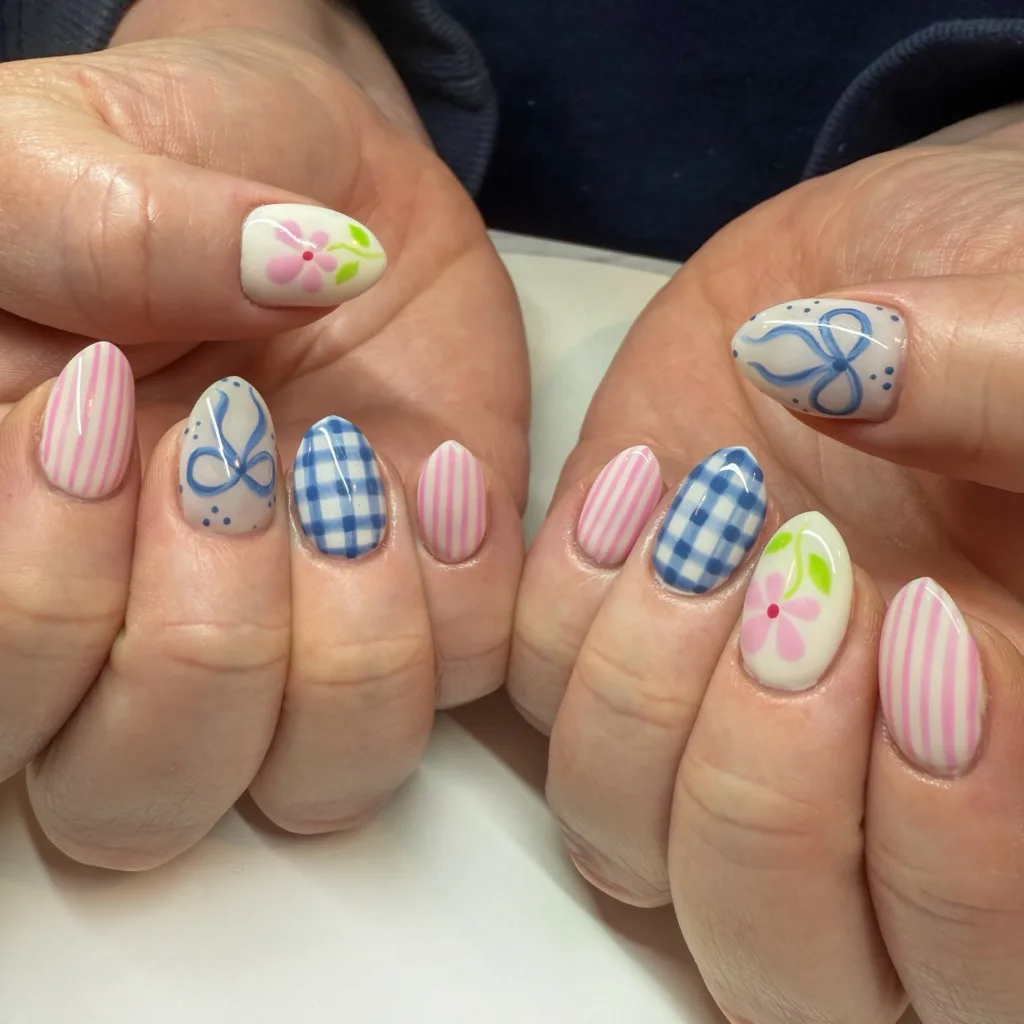
- Nail art: squoval gives you more flat surface for designs. Almond suits simple shades and thin french tips.
My usual advice: wear almond when you get gel, and tapered squoval when your nails are bare and rebuilding.
Test Almond vs Squoval on Your Own Hands Tonight
Photos of other people’s hands only get you so far. Do this instead.
- Grow a little free edge. You need at least 2 to 3 mm past the fingertip to file a shape at all.
- File one hand almond, one hand squoval. Yes, really. Use a 180 grit file and work from the side toward the center, one direction only.
- Paint both the same color. A sheer milky pink is best. Color differences will skew your judgment.
- Photograph both hands flat on a table, from above, in daylight. Then photograph both held up, fingers relaxed.
- Compare the photos, not the mirror. You’ll see instantly which hand looks longer. Most people are surprised by how much a 1 mm change in sidewall does.
Want to skip the filing stage? You can preview almond, oval, squoval and coffin on a photo of your own hand in Nartie, which makes it easier to walk into the salon knowing exactly what to ask for. If you want a broader breakdown by hand and finger type, our guide on how to pick a nail shape for your hands covers nail bed width too.
Length, Color and Art Tricks That Add Length
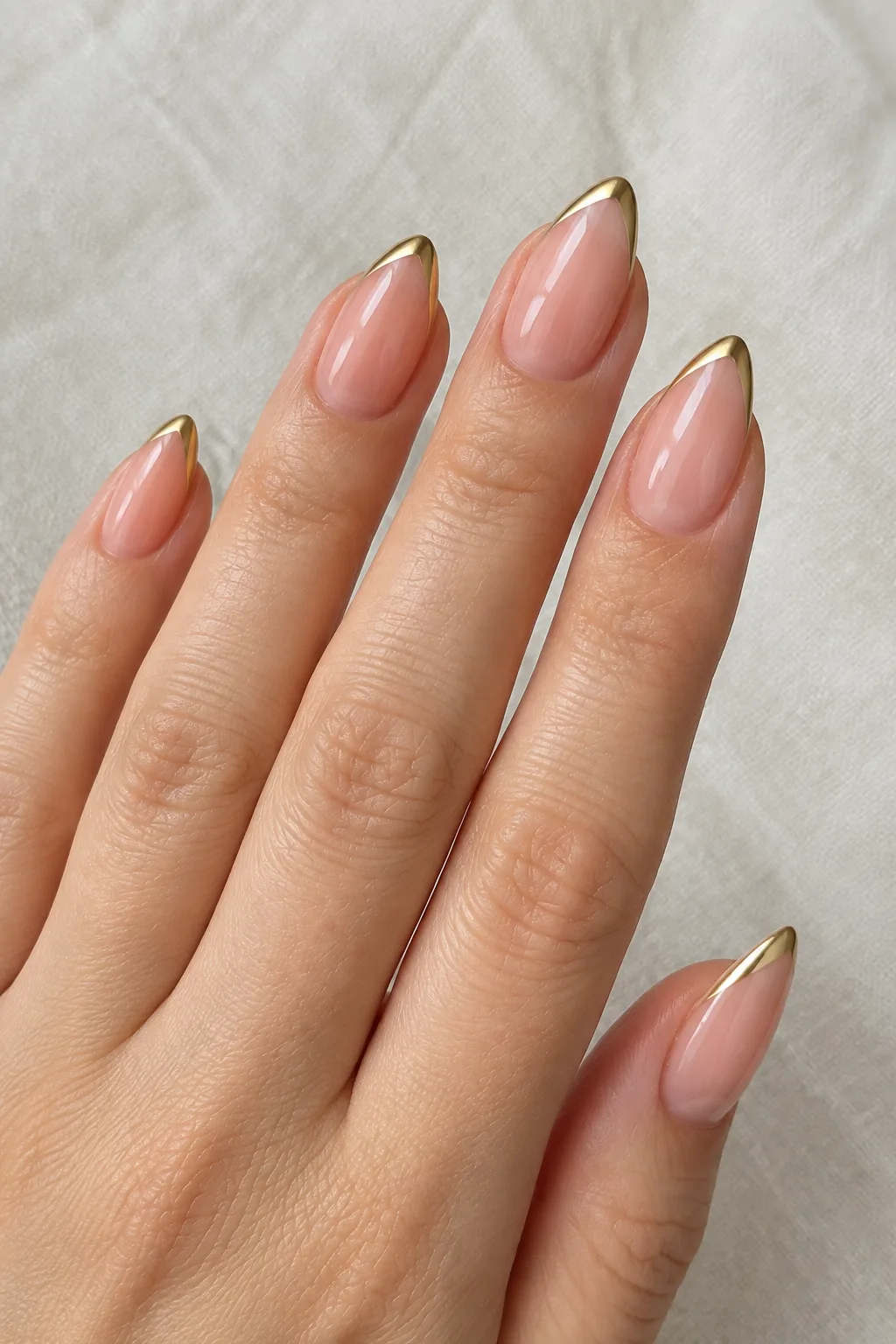
Shape does most of the work, but these push it further.
- Leave the sidewalls bare. Ask your tech to stop the polish about 0.5 mm from the skin on each side. A thin bare strip makes the nail look narrower.
- Don’t flood the cuticle. Polish that touches the cuticle line shortens the whole nail. A clean gap of 1 mm reads longer.
- Choose shades close to your skin. Soft nudes, milky pinks and sheer peach blend the nail into the finger. Browse nude nail ideas if you want options that suit different undertones.
- Go vertical with art. Thin stripes, a single line down the center, a long french tip on the diagonal. Horizontal bands cut the nail.
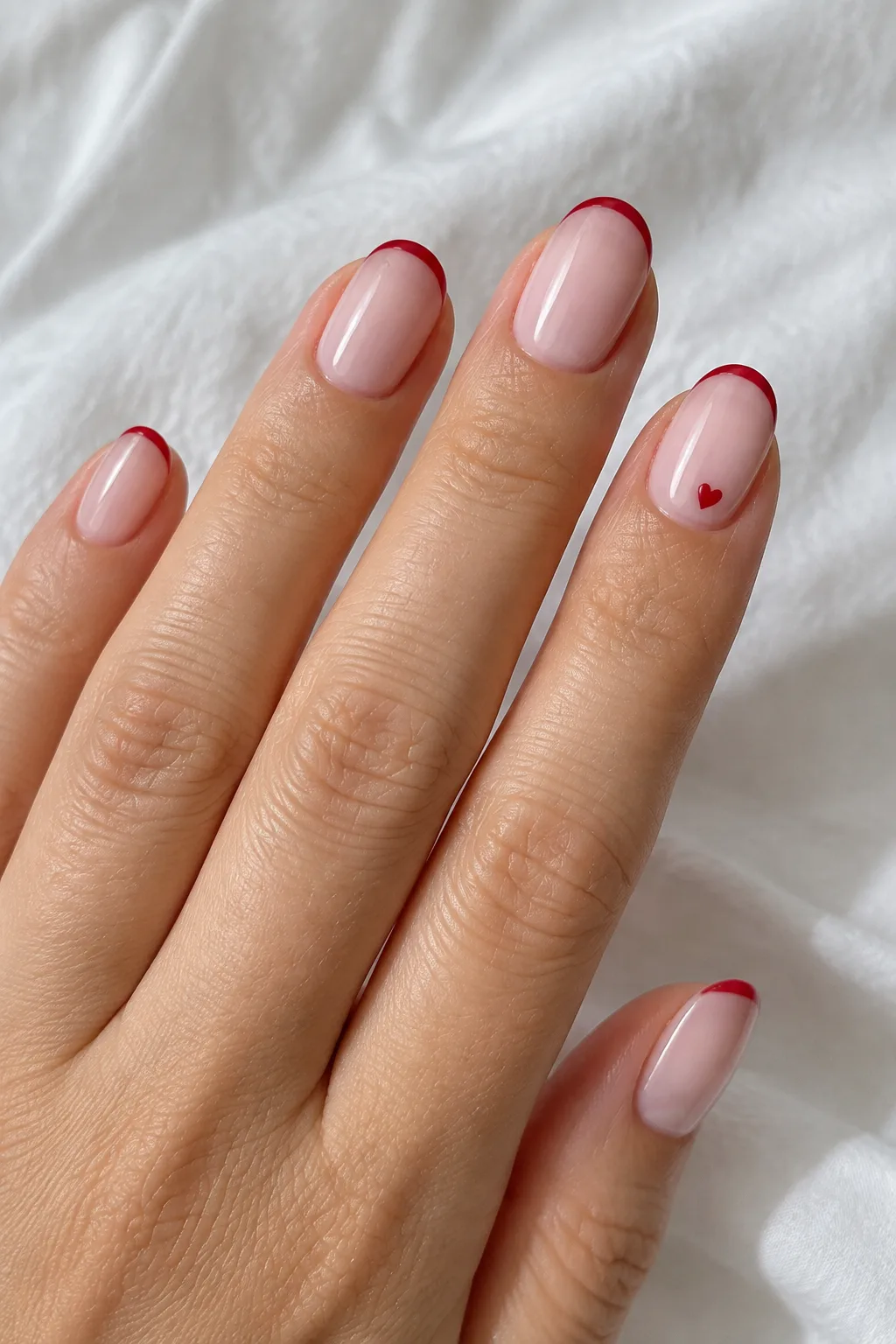
- Keep french tips thin. A 2 mm white smile line looks elegant. A thick chunky tip eats length. See french tip nail designs for slim modern versions.
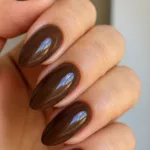
- Dark colors are fine. The old rule that dark shades shorten hands isn’t true if the shape is tapered and the sidewalls are clean. Deep cherry on short almond looks great.
- Glossy over matte. Shine reflects light along the nail and stretches it. Matte flattens the surface.
What to Ask Your Nail Tech
Exact words help. Try: “Short almond, about 5 mm of free edge, tapered sidewalls, soft rounded tip, and please leave a small gap at the cuticle and sides.”
If you’re on natural nails, add: “File in one direction only and keep the apex centered.” That keeps short nails from peeling at the corners.
Bring two photos: one of the shape you want, one of the color. Techs work faster and more accurately from a photo than from a description. Expect around 20 to 30 dollars for a gel polish manicure with shaping in most US salons, and 45 to 70 dollars for builder gel or extensions.
One last thing from experience: after about 10 days, almond drifts. The point wanders off center as the nail grows out from the cuticle. Two minutes with a file at home on day 10 keeps it looking fresh until your next appointment. For inspiration at this length, our roundup of short almond nail ideas shows what it looks like in real life.
Related Nail Ideas
- how to pick a nail shape for your hands
- short almond nail ideas
- nude nail ideas
- french tip nail designs
FAQ
Does almond really make short fingers look longer?
Yes. The tapered sidewalls create a slim vertical line from cuticle to tip, and your eye reads that as extra length. Most people gain the look of a few extra millimeters without growing their nails at all. The effect is strongest when the sides are filed in slightly narrower than the nail bed.
Are short square nails bad for short fingers?
Not bad, but they need adjusting. A wide flat square adds a horizontal line across the tip and makes the nail bed look broader. If you love square, ask for a tapered squoval with soft corners and a little free edge showing. It keeps the clean square look while slimming the finger.
What nail length works best for short fingers?
Aim for 3 to 6 mm of free edge past your fingertip. That’s enough to shape properly and get a lengthening effect, but short enough to stay strong and easy to live with. Going much longer usually looks out of proportion on a small hand.
Which shape suits short, wide nail beds?
Almond or a tapered squoval. Both narrow the tip so the wide base is less obvious. Avoid deep round filing, which follows the width instead of correcting it. Leaving a thin bare strip down each sidewall when you polish helps a lot too.
Can I get almond nails on natural short nails?
Yes, once you have about 3 mm of free edge. Natural almond is a little more fragile than squoval, so keep it short, use a strengthening base coat, and file in one direction only. If your nails peel, try builder gel over your natural nail instead of extensions.